
|
Stefan Annerel Page 1 | 2 | 3 | 4 | 5 | Biography | Information & News |
||||||||
|
||||||||
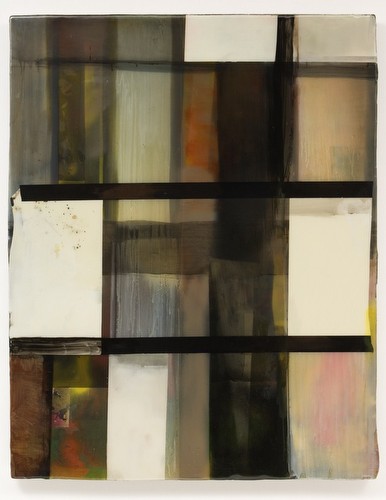
OLD STUART 2011, 140 x 110 cm
|
The eye is a trick of the eye.
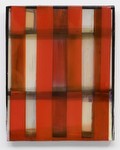
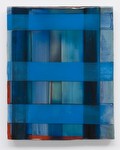
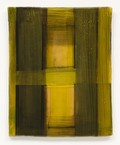
It is possible to stare at abstract patterns or forms for such a long time that images appear: a face in a piece of wood; an animal in a block of marble. This is perception in overdrive; the blind recognition of man craving for a knowable world. But the opposite is also possible: to focus so intently on objects, or images of objects, that their meaning blurs—that they are no longer recognisable as what they are (or what we think they are), but become mere abstract patterns. This is perception come to a stop; the visionary blindness of the man of forms—of The latter strategy is the basic structure which underlies the work of Stefan Annerel (b. 1970). Annerel isolates motifs which he borrows from everyday, vernacular imagery: advertisement photographs, patterns of textile—in fact any image trouvé in which he finds an unwilled referent behind the image that triggers his fascination: the abstract interest of a (once) figurative fragment of reality. The artist blows these fragments up to such a size that their already strained relationship with the real, visible world (or what we perceive as such) becomes even more precarious: his works are formidable but fragile fragments of a broken reality with which we are loosing touch. Looking at these blown-up fragments, the viewer treads in the artist’s footprints, but in the opposite direction: he does not find abstraction where once was plain reality, but strains his eyes to make them remember the figurative reality behind these images. |
|||||||
|
||||||||
|
||||||||
International contemporary art
SIGN UP FOR NEWSLETTERS
 SERVICE OVERVIEW
SIGN UP for ARTIST MEMBERSHIP
SIGN UP for GALLERY MEMBERSHIP
NEWSLETTERS & ANNOUNCEMENTS
NEWSLETTER SCHEDULE
ARTIST OPPORTUNITIES
POST ARTIST OPPORTUNITY
SERVICE OVERVIEW
SIGN UP for ARTIST MEMBERSHIP
SIGN UP for GALLERY MEMBERSHIP
NEWSLETTERS & ANNOUNCEMENTS
NEWSLETTER SCHEDULE
ARTIST OPPORTUNITIES
POST ARTIST OPPORTUNITY
Click on the map to search the directory