re-title.com
17 June 2011
  Photography, Film & Video  

ANDREW RAFACZ GALLERY, Chicago
YANCEY RICHARDSON GALLERY, New York
GALERIE WILMA TOLKSDORF, Frankfurt
GMK, Zagreb
WILKINSON GALLERY, London


ANDREW RAFACZ GALLERY, Chicago
 
 
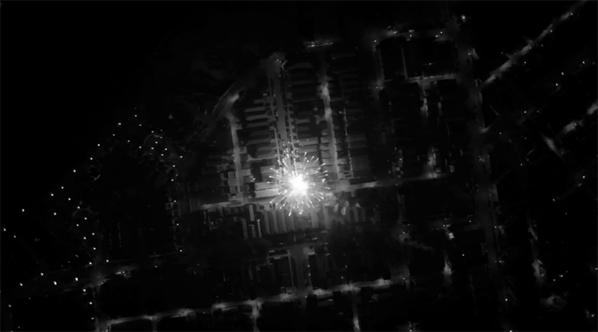
Greg Stimac, Empire, HD video, 12 minutes duration, 2011
 
Greg Stimac, Empire, HD video, 12 minutes duration, 2011
Courtesy of Andrew Rafacz Gallery, Chicago
 
 
GREG STIMAC: Empire
 
May 21st - July 2nd, 2011
 
ANDREW RAFACZ is pleased to announce a solo exhibition of a new video by Greg Stimac.
 
Andrew Rafacz continues the 2011 season with Empire, a new projected video work by Greg Stimac in Gallery One. This is the artist�s third exhibition with the gallery and continues through Saturday, July 2, 2011.
 
In past years Stimac has photographed roadside memorials, bottles of urine resting in ditches, and active firing ranges, as if indexing the overlooked elements that mark the way for a culture whose identity is always in flux. He has catalogued uniquely American experiences with the photographic series �Mowing the Lawn� and the video Peeling Out. Always vigilant of our collective concerns and desires, Stimac continues to document the singular experiences of his own culture.
 
Empire, whose title undoubtedly refers to both Warhol�s nearly static film of the Empire State Building and America itself, was shot during last year�s Fourth of July celebrations. Aerially tracing the city�s grid, the high definition video documents our celebration of independence and fascination with war. Stimac presents the 11 minute long piece in silent black and white, making reference to the historical precedence of countless war room documents. As the camera moves along the streets of the city, explosions occur inside and outside the frame, illuminating the scene and reminding the viewer of a certain ubiquity to the proceedings.
 
GREG STIMAC (American, b. 1976) lives and works in Northern California. He received his B.F.A. from Columbia College, Chicago in 2005. Past exhibitions include Worlds Away: New Suburban Landscapes, which began at The Walker Museum of Art, Minneapolis and traveled to the Carnegie Museum of Art, Pittsburgh and USA Today, at the Museum of Contemporary Art, Chicago, an exhibition of works from their permanent collection. Recently, his work was included in Faraway Nearby at the Nerman Museum and FAMILIAR: Portraits of Proximity at the Kansas City Jewish Museum of Contemporary Art, both in Overland Park, Kansas. He had a solo exhibition at White Flag Projects in St. Louis, Missouri, 2010. Stimac�s work was last seen at the gallery in February 2010 with his eponymously titled solo exhibition. Prior to that, his work was shown in the group exhibition Bad Moon in December 2008. He is in the permanent collections of the Museum of Contemporary Art, Chicago, Museum of Contemporary Photography, Chicago, UBS, the Wieland Collection, Atlanta, GA and the Ruttenberg Collection, Chicago, IL, among others.
 
 
ANDREW RAFACZ GALLERY
835 W. Washington
2nd Floor
Chicago, IL 60607
T: +1 312 404.9188


YANCEY RICHARDSON GALLERY, New York
 
 
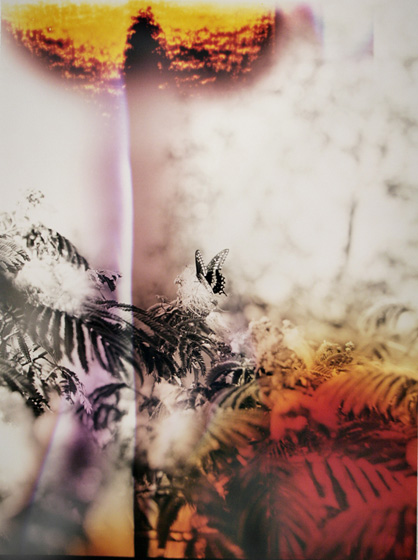
Bryan Graf, Butterfly #7, from Wildlife Analysis, 2011
 
Bryan Graf, Butterfly #7, from Wildlife Analysis, 2011
� Bryan Graf, courtesy the artist and Yancey Richardson Gallery
 
 
BRYAN GRAF: Field Recordings
 
June 9 - July 15, 2011
 
The Yancey Richardson Gallery is pleased to present Field Recordings, an exhibition of photographs by Bryan Graf, which marks the first solo show for the artist in the gallery's main exhibition space. The title of the show refers to a term for audio recordings made outside of the studio, sometimes involving the ambient sounds of nature. In this instance it refers to the onsite interactions of photographic materials with a particular place.
 
The body of work � Wildlife Analysis � was made in the woods and swamps around New Jersey. While photographing these places with black and white film, Graf used unexposed color film to record the direct contact of ambient light flooding onto the film without the use of a lens. Graf then uses the exposed color film as a composite layer in the darkroom. Using these tools he take us on a hallucinatory trip through his native landscape. The images themselves are obstructed by a river of intoxicating hues, blending and shifting as they wash across the prints.
 
Additionally, a selection of Polaroids, from The Sun Room: Interchanges, B-Sides & Remixes series gives us a glimpse into Graf's studio practice. He refers to these images as "sketches� made in and around his studio, which doubles as a sun room for plants in the spring and summer months. These images are small-scale experiments made over the past four years while he was working on various projects.
 
Also included in the exhibition is the sculptural piece, An Encyclopedia of Gardening, a collection of gardening encyclopedia covers that were published in 1960, which the artist initially found in his family's archive of gardening manuals. The same image that was used for the front cover was flipped and mirrored for the back cover. Graf then arranged the covers to accentuate the prismatic nature of the collection while contrasting the differences of tone and effects of time on each individual book.
 
Bryan Graf lives and works in Peak's Island, Maine and New Jersey. He received his M.F.A. from Yale University in 2008 and his B.F.A from the Art Institute of Boston in 2005. His work has appeared in Blind Spot and the New York Times, among other publications.

 
YANCEY RICHARDSON GALLERY
535 West 22nd Street 3rd floor
New York, NY 10011
T: 1 646-230-9610


GALERIE WILMA TOLKSDORF, Frankfurt
 
 
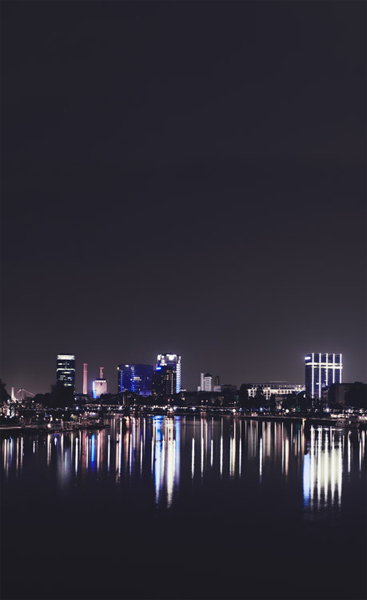
Axel Hütte, Frankfurt, (Night), 2011
 
Axel H�tte, Frankfurt, (Night), 2011, Duratrans, 237 x 157 cm, Ed. 4
Courtesy of Galerie Wilma Tolksdorf
� Axel H�tte / VG Bild Kunst
 
 
AXEL H�TTE
FRANKFURT 2011 // EMETH
 
May 28 2011 � Jul 23 2011
 
The show FRANKFURT 2011 // EMETH (in Hebrew EMETH stands for "truth" - METH means "death") at Galerie Wilma Tolksdorf presents recent works of Axel H�tte made in Frankfurt.
Axel H�tte (*1951) is one of internationally most renowned fine art photographers. His works were shown in numerous outstanding institutions, such as MOCA Los Angeles, Solomon R. Guggenheim Museum, New York, Mus�e d'art moderne de la ville de Paris or Museo Nacional Centro de Arte Reina Sof�a, Madrid. Photographs of Axel H�tte are included in the collections of the most important museums of international modern and contemporary art.
 
The different works as a whole focus on the rapid changes of environmental reality, the alteration of urban and natural landscapes and the reception of the visible reality. In "Tableau Frankfurt am Main", 2011 Axel H�tte brings together postcards picturing the city before the 2nd World War with his own photographs of the present views of the city. By opposing images from different decades the artist hints us towards the diverse modes of representational images and the changes within the visual perception. Consequently and in an ironic way, H�tte chooses the format of an overdimensioned postcard - an out-dated medium of mass communication in today's society.
 
The perfectly composed photographs of nighttime cityscapes integrated by Axel H�tte feature the particular skyline of Frankfurt. Like all nighttime photographs of Axel H�tte those pictures were taken with extremely long exposure time - also in details one can find the examination of the notion of time which reveals the hidden and focuses the perception.The artificial lights illuminating the darkness in "Ratskeller", 2011 create a shifting moment in the perception and constitute an irritating, magical atmosphere. Although the scene is deserted, or precisely because of the absence of people strong energy emanates from the image.
 
The works "Stadtwald-01" and "Stadtwald-02" reveal similar pictorial quality. Only at the second glance one does recognize the motif of a trembling forest being reflected in a lake. Those photographs are poetic on various levels - they are a reflection of a reflection of a reflection.
 
Despite the strong motif of cemetery the gentle images of H�tte capture the theme from an aesthetic angle; they avoid any topical drama and overdrawn emotionalism. The tombs are structurally completely embedded in the landscape and seem to be as naturally grown as the trees surrounding the scenery - the black-white photography underlines this homogeneous impression.
 
Axel H�tte creates images capturing the mysterious character and the atmospheric spirit of urban landscapes. By choosing ditone print as technique for his images he enhances the aesthetic effect: the uncoated paper used in this case is more sensual through its matte surface which differs from the glossy c-prints we also know from H�tte.

 
Galerie Wilma Tolksdorf Frankfurt
Hanauer Landstrasse 136
60314 Frankfurt
T: +49 69 � 43 05 94 27


GMK, Zagreb
 
 
Mark Tribe, still from ‘The Dystopia Files’
 
Mark Tribe, still from �The Dystopia Files�
Courtesy of the artist and g-mk | galerija miroslav kraljevic
 
 
MARK TRIBE "The Dystopia Files"
 
June 9th � July 9th 2011
 
�The Dystopia Files� at g-mk is the newest iteration of Mark Tribe's ongoing project, which recontextualizes the history of demonstrations in the US. The artist had gathered an archive of protest footage, which serves as a base for creating site specific video installations in gallery and museum spaces. The work tackles on a set of questions about power relations, spectatorship, image manipulation, participation, interaction and political engagement.
 
The relationship between these issues and recent curatorial practices will be discussed during the workshop held by Mark Tribe. In a talk following the workshop, Mark will present his multimedia artistic practices, including his previous acknowledged projects such as Rhizome and Port Huron.
 
The exhibition is curated by Zeljka Himbele Kozul.
 
Mark Tribe (American, b. 1966) graduated in 1990 from Brown University, Providence, RI, and received a MFA in Visual Arts from the University of California, San Diego, CA in 1994. His acclaimed art projects often incorporate various media and technologies. They revolve around institutional critique, activism, audience participation and collaboration, and raise questions about performance, mediation and public sphere. Tribe�s art work has been exhibited at Wexner Center for the Arts, Columbus, OH; LACE (Los Angeles Contemporary Exhibitions); Ronald Feldman Gallery, New York, NY; the DeCordova Biennial at DeCordova Museum and Sculpture Park, Lincoln, MA; Aspen Art Museum, Aspen, CO; Park Avenue Armory, New York, NY; Haifa Museum of Art, Haifa, Israel; and the National Center for Contemporary Art, Moscow, Russia. He has organized curatorial projects for the New Museum of Contemporary Art, MASS MoCA, and inSite_05. Tribe is the author of two books, The Port Huron Project: Reenactments of New Left Protest Speeches (Charta, 2010) and New Media Art (Taschen, 2006), and numerous articles. He has lectured at CalArts, Goldsmiths College, the Boston Museum of Fine Arts, MIT, and UCLA. He is Assistant Professor of Modern Culture and Media Studies at Brown University, where he teaches courses on digital art, curating, open-source culture, radical media, and surveillance. In 1996, Tribe founded Rhizome, an organization that supports the creation, presentation, preservation, and critique of emerging artistic practices that engage technology.
 
The exhibition is supported by: Ministry of Culture, Republic of Croatia; City of Zagreb - City Office for Education, Culture and Sports; Embassy of the US, Zagreb.

 
g-mk | galerija miroslav kraljevic
subiceva 29
10 000 Zagreb
Croatia
T. +385 1 45 92 696


WILKINSON GALLERY, London
 
 
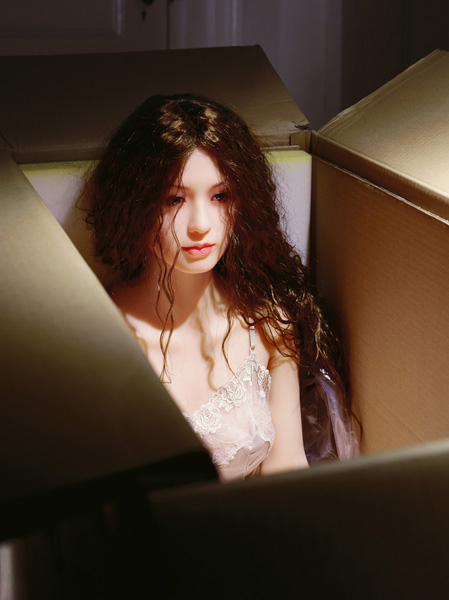
Laurie Simmons, The Love Doll / Day 27 / Day 1 (New in Box)
 
Laurie Simmons, The Love Doll / Day 27 / Day 1 (New in Box),
Fuji Matte print (177.8 � 133.4 cm), Edition of 5
Courtesy of Wilkinson Gallery, London
 
 
LAURIE SIMMONS
THE LOVE DOLL: DAYS 1 � 30
EARLY BLACK AND WHITE INTERIORS
 
9 June to 10 July 2011
 
Wilkinson Gallery is pleased to present its first solo exhibition with the acclaimed New York-based artist Laurie Simmons. This will also be the artist�s first solo exhibition in London. Over the last 30 years Simmons has garnered a significant reputation internationally as one of the leading artists to emerge from the New York �Pictures Generation� during the 1970�s and 80�s.
 
Laurie Simmons moved to New York in 1973, with her close friend and photographer Jimmy De Sana. The two artists converted an old sweatshop in Soho into their studio and living space. Together the pair set up Laurie�s first darkroom, and under De Sana�s tutelage, Simmons came to understand, with a far greater awareness, the intricacies of the camera and the complexities of production techniques. From 1975, Laurie began to photograph her dolls in these evocative nourish black-and-white scenarios. Whilst the resultant images were beautifully intricate alter-realities, the artist was amazed by their apparent realism � �I actually believed that the rooms I was shooting could be mistaken for real places�. Simmons was immediately struck by the camera�s propensity to lie � and indeed the role images constitute in our own construction as subjects � whether it be as sons, daughters, family members or citizens.
 
In the Lower Gallery Simmons presents one of her earliest series, Early Black and White Interiors (1976-78). This series staged these now iconic miniature spaces, using dollhouse furniture and other seemingly banal props, to conjure a pseudo reality. The domestic objects and dated wallpaper, much of which she found in an old general store in upstate New York, were relics of a domesticity that came to define the previous generation, not the countercultural movement to which Simmons and her New York set belonged. Simmons had lived as a self-identified hippie for much of her young adult life. Communal living of this nature - that typified many young peoples experience of the 1970�s - was intended to erase the authoritarian structure of the nuclear family and the parochial idealism of suburbia. There was a critical move among Simmons, and other emerging artists of the period, to deconstruct and question the domestic and social formalism that symbolized 1950�s suburban America and indeed Laurie�s own youth. It was a narrative visible in the work of other key artists of the time like Barbara Kruger, Richard Prince, Martha Rosler and Cindy Sherman. However, Laurie�s exploration of these subjects was totally unique. Her manipulation of miniaturised objects, dolls and interiors provided these domestic Mise-en-scenes with a dream like quality, which isolated the images from the austere �Pseudo-Documentary� aesthetic other artists were trying to achieve. There is a an undeniable reference to memory and youth in these images, specifically the childhood associated with 1950�s popular culture � from the use of the artist�s own toys, to the evocation of editorial pages from Life and Look magazines or family-oriented situation comedies like Father Knows Best . Although these images enter a line of questioning that came to define much artistic output from New York during the late 1970�s � they are uniquely tinged with a poignant sense of nostalgia, but with an equally disquieting sense of dislocation.
 
In the Upper Gallery Simmons presents six new works from her most recent series, The Love Doll: Days 1 � 30 (2009-11). In the fall of 2009, the artist ordered a customized, high-end love doll from Japan. The doll, designed as a surrogate sex partner, arrived in a crate, clothed in a transparent slip and accompanied by a separate box containing an engagement ring and female genitalia. Simmons began to document her photographic relationship with this human scale �girl�. The resulting photographs depict the lifelike, latex doll in an ongoing series of �actions�, shown and titled chronologically from the day Simmons received the doll, through to the present. The photos reveal the relationship the artist develops with her model. The first days depict a somewhat formal and shy series of poses with an ever-increasing familiarity and comfort level unveiled as time passes. A second doll arrived one year later. This new character, and the interaction between the two, reveal yet another dynamic in composition - both formally and psychologically.
 
In search of a stage for her Love Doll, Simmons turned to a human scale home, transforming it into an artfully staged, color coordinated, oversized dollhouse. The Love Doll series is not only a reminder of Simmons� past examinations of the dollhouse, but also engages with adult fantasies and fetishes, infused with an even more potent sense of desire and regret.
 
Laurie Simmons was born in Long Island, New York (1949) and lives and works in New York City. She received a BFA from the Tyler School of Art, Philadelphia in 1971. Important retrospective museum exhibitions include The Baltimore Museum of Art, Maryland (1997) and San Jose Museum of Art, San Jose, California (1990). Her work can also be found in the permanent collections of the Metropolitan Museum of Art, The Museum of Modern Art, the Whitney Museum of American Art, The Solomon R Guggenheim Museum of Art, The Walker Art Center, Minneapolis, The Museum of Contemporary Art, Los Angeles; the Philadelphia Museum of Art; the Corcoran Gallery of Art in Washington DC; the Hara Museum in Tokyo; and the Stedelijk Museum, Amsterdam, amongst others. Recent survey exhibitions include �Pictures by Women: A History of Modern Photography�, MOMA, New York (2011); �Off The Wall: Part 1 � 30 Performative Actions�, Whitney museum of American Art, New York (2010) and �The Pictures Generation, 1974 � 1984�, The Metropolitan Museum of Art, New York (2009). In 2006 the artist directed her first feature length film �The Music of Regret� which was premiered globally at MOMA, New York and Tate Modern, London (2006). She received a Guggenheim Foundation Fellowship in 1997 and a National Endowment for the Arts Fellowship in 1984. Simmons was also the recipient of the 2005 �Roy Lichtenstein Residency in Visual Arts,� at The American Academy in Rome. In 2010 Simmons co-starred in �Tiny Furniture�, a feature film written and directed by the artist�s daughter Lena Dunham. The film�s plot focuses on the trials and tribulations of 22-year-old Aura, modeled on and played by Lena herself, Laurie plays the role of Siri, the artist mother loosely based on her. The film was the winner of the 2010 South By Southwest Narrative Feature Film Award.
 
At this years Art Basel | 42 Wilkinson Gallery will exhibit a unique installation of work by Laurie Simmons and Jimmy De Sana, exploring the two artist�s dialogue between 1973-1990.

 
WILKINSON GALLERY
50-58 Vyner Street
London E2 9DQ
T: +44 (0) 20 8980 2662


 re-title.com 
BM Box 5163
London
WC1N 3XX
United Kingdom
+44 (0) 870 922 0438