|
Galerie Voss presents Sandra Senn / Fl�chtiges Getriebe Archive | Information & News |
||||
|
Sandra Senn / Fl�chtiges Getriebe
Apr 08, 2016 - May 21, 2016 |
|||
|
||||
|
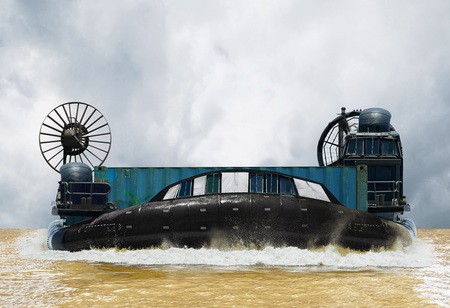
Sandra Senn / Flüchtiges Getriebe Apr 08, 2016 - May 21, 2016 Fleeting Transmission Sandra Senn (b. 1973) composes models of pictorial worlds and in this way creates interfaces between fiction and reality. The pictures are assembled in painterly fashion from various elements that the artist herself photographs and playfully, with subcutaneous subversion, incorporates into an imaginary landscape. The subtle arrangements – the fleeting transmissions that spark associations, awakening memories and feelings – are also shaped by contemporary events. Banal building sites riding on waves? Archaic arches fallen out of time? What Sandra Senn turns into narrative so playfully but with such subcutaneous subversity sparks meandering associations, transposing feeling into multiple currents of memory. Profane building materials, chipboard panels, lumber – both banal and unmistakably cheap – lean with the silhouette of house-like, voluminous ships in a polyphonic chorale that resists specific recognition but offers ample material for theatrical dreams, sleepwalking theater. As though it were a matter of keeping distance from inquiring glances, the blinded ships of Sandra Senn apparently drift about without expression, unresponsive and mute, yet if one listens more closely, murmur faintly with many different voices in the endless ocean of intangible yearning, without explicitly postulating whose piece is now being played, whose fate at sea has made its way to the stage. On distant seas, far removed from civilization, followed if at all by a final pair of seagulls, these exiles that, had one asked, never wished to be exiled, drive on with each other and with the waves toward an indefinite future. How would it be if their facelessness possessed an inner countenance? Text: Markus Stegmann Translation: David Galloway --- Wessen Windmühlenschiff geistert da auf See? Banale Baustellen auf Wellen? Archaische Archen, aus der Zeit gefallen, um wen oder was zu retten? Und woher all dies, wohin unterwegs? Was Sandra Senn so spielerisch wie subkutan subversiv mit leichter Hand in Narration versetzt, zündet in der Vorstellung mäandernde Assoziationen, versetzt die Empfindung in multiple Strömungen des Erinnerns. Profane Baustoffe, Pressspanplatten, Bauholz, so banal wie unübersehbar billig kippen mit der Silhouette haushaft voluminöser Schiffe in einen vielstimmigen Choral, der sich eindeutiger Erkennbarkeit entzieht, jedoch reichlich Stoff für theatralische Träume, traumwandlerisches Theater bietet. Als gälte es, neugierige Blicke fernzuhalten, treiben die erblindeten Schiffe Sandra Senns scheinbar ohne Ausdruck, reglos und stumm, bei genauerem Zuhören jedoch mit vielerlei Stimmen leise murmelnd im endlosen Ozean ungreifbarer Sehnsucht, ohne dass plakativ postuliert worden wäre, wessen Stück da gerade gespielt würde, wessen Schicksal auf See zur Aufführung gelangte. Auf weiten Meeren, fernab der Zivilisation, wo, wenn überhaupt, ein paar letzte Möwen folgen, treiben diese Ausgesetzten, die, hätte man sie gefragt, nie ausgesetzt sein wollten, mit sich und den Wellen allein einer unbestimmten Zukunft entgegen. Was wäre jedoch, wenn ihre Gesichtslosigkeit ein inneres Antlitz besässe? Text: Markus Stegmann |
||||
re-title.com
International contemporary art
SIGN UP FOR NEWSLETTERS

 SIGN UP for ARTIST MEMBERSHIP
SIGN UP for GALLERY MEMBERSHIP
SIGN UP for ARTIST MEMBERSHIP
SIGN UP for GALLERY MEMBERSHIP
Click on the map to search the directory