|
The Center for Fine Art Photography (C4FAP): BLACK + WHITE 2014 with Juror Jason Landry | Tape/estries - Patrick Nagatani - 23 May 2014 to 19 July 2014 Current Exhibition |
||||
|
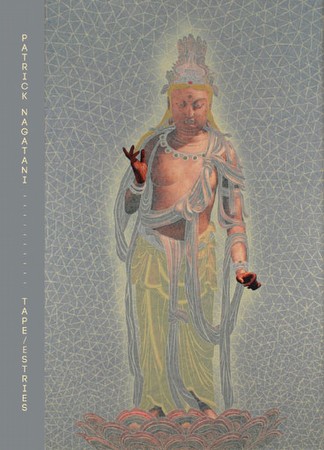
Patrick Nagatani
Ushnishavijaya |
|||
|
|
||||
|
BLACK + WHITE 2014 with Juror Jason Landry May 23 - July 12, 2014Reception Friday | June 6 | 6:00 pm - 9:00 pm Juror Jason Landry Exhibition Opens May 23rd, 2014 JUROR | Jason Landry Jason Landry is a writer, photography collector and owner of Panopticon Gallery in Boston. Landry earned his B.F.A. in Photography at the Massachusetts College of Art and Design, and an M.F.A. in Visual Arts from the Art Institute of Boston at Lesley University. In 2013 he accepted the position of Director of the MFA in Photography program at the New Hampshire Institute of Art, his book, Instant Connections: Essay and Interviews on Photography was published, and he started blogging for the Huffington Post. HONORS | AWARDS Juror’s Selection: Jim Kazanjian, Untitled, UFO Juror’s Honorable Mention: Scott Lerman, Liquid 02Juror’s Honorable Mention: Michael Frye, Orchard with Sunbeams and Fog Director’s Selection: Michelle Rogers Pritzl and Pauline Gola Director’s Honrable Mention: Michelle Rogers Pritzl and Pauline Gola Director’s Honorable Mention: Jim Kazanjian, Untitled, UFO Two LiveBooks Website Awards: Valued at $399 from liveBooks.com – To Be Announced --- PATRICK NAGATANI TAPE-ESTRIES: The Spirit of Permanence and Impermanence June 6 - July 19, 2014 Interwoven into the Materials Used in the Artistic Process In his statement “Confessions of a Tapist (Tape-estries 1982 to present),” Patrick Nagatani discusses his meditative approach to creating the astounding nine taped Chromogenic prints (approximately 49” x 31” each) of Asian deities and bodhisattvas on exhibit at the Center for Fine Art Photography, along with the technical aspects of his process. What follows are selections from that statement: “The taping process is obsessive. It is done with precision and ardor. The subtle color of the tape [strips of 3/4 inch to 2 inch masking tape] creates my range of hues for my ‘painting’ palette. There are varying degrees of translucency and the amount of layers dictate a value shift. The tearing and cutting parodies a variety of ‘brush strokes.’” “I have often desired the overlay of sensory experience in my work. These pieces require looking from afar and getting in very close, both vantage points offer different visual experiences. The pieces are wonderful to touch.” “Time passes and only my aching fingers and shoulders indicate how long I have been continuously painting with tape. Decisions are made as a reaction to the materials. My entire day is shaped by solitude and what I believe is constructed beauty. I relish the fact that the tape is an inexpensive and somewhat castaway art material. The Zen of the material and process moves me to spiritual happiness.” “I’ve been in the zone off and on for over thirty years with this work. Time has no fixed position, it has been positive energy for me. It has left me no room or desire for negative creative existence. Most things seem to now have a place in the cosmic meaning of things. Especially in coping with getting older, dealing with cancer and losing both of my parents recently.” “The original surface images are large Chromogenic Lightjet photographs from a variety of sources that are often collaged and manipulated in Photoshop. These are cold mounted with Coda (two sided archival adhesive) to museum board. The archival museum board is contact cemented to oak wood laminate and stretcher bars are wood glued for stability. Finally, the entire finish taped surface is multi-coated with Golden Acrylic Matte Medium of different strengths. Two final brush coatings of Golden Polymer Varnish with UVLS (Ultraviolet filters and stabilizers) are finally applied. Although masking tape is not considered an ‘archival’ medium, the matte medium both seals the piece from oxidation and soaks through the masking tape for added adhesion.” My ‘tapist’ career started in 1982 and the pieces made at that time have lasted through the years. I believe that the pieces have a life of their own and will change very slowly in time, much like mummies from ancient Egypt have lasted through the centuries but nevertheless have changed. The work might be seen as an evolving entity with the spirit of permanence and impermanence interwoven into the materials used in the artistic process.” |
||||
|
||||
re-title.com
International contemporary art
SIGN UP FOR NEWSLETTERS

 SIGN UP for ARTIST MEMBERSHIP
SIGN UP for GALLERY MEMBERSHIP
SIGN UP for ARTIST MEMBERSHIP
SIGN UP for GALLERY MEMBERSHIP
Click on the map to search the directory