|
gb agency: The Boy Who Cried Wolf (Lefty Loosey, Right Tighty) Curated by Tulips & Roses, Vilnius - 27 Mar 2010 to 30 Apr 2010 Current Exhibition |
||||
|
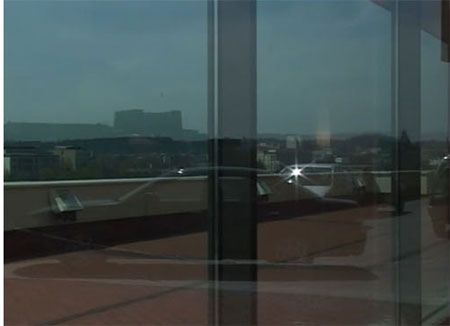
Deimantas Narkevicius, Matrioskos, 2005, video still
|
|||
|
||||
|
||||
|
English below Boy Who Cried Wolf (Lefty Loosey, Right Tighty ) Mac Adams, Liudvikas Buklys, Gintaras Did�iapetris, Ryan Gander, J�lius Koller, Juozas Laivys, Deimantas Narkevicius, Rosalind Nashashibi, Gintautas Trimakas Sur une proposition de Tulips & Roses, Vilnius 27 mars - 30 avril 2010 Le titre de cette exposition est en fait une formule. La premi�re partie provient d�un conte � propos d�un gar�on qui se servait uniquement des mots pour le plaisir. Ce n��tait pas vraiment un menteur, mais il d�couvrit � son grand �tonnement que l�on pouvait employer les mots pour leurs effets sans prendre en compte leur signification. Pendant un bref moment s�ouvrit � lui tout un monde de possibilit�s. Le gar�on r�alisa que l�on pouvait � volont� et � tout moment relier deux points dans l�univers et que les mots et les choses mijotent dans la m�me marmite de soupe. Malheureusement, le loup avait compris cela un peu plus t�t. La seconde partie du titre est un petit po�me mn�motechnique pour les enfants de langue anglaise afin qu�ils se souviennent que l�on d�visse vers la gauche et que l�on visse vers la droite. Celui-ci nous indique �galement que nous comprenons parfois les choses non pas par ce qu�elles signifient, mais parce-qu�elles riment bien ou parce-qu�elles font de dr�les de bruits. Ceci �tant dit, les oeuvres de cette exposition peuvent �tre group�es en plusieurs cat�gories. Premi�rement, les oeuvres qui font des choses sans les dire. Par exemple, la construction noire et �vid�e de Liudvikas Buklys est un objet design purifi� - une pure et d�lirante figure de fonctionnalit� en tant que telle. Suspendu au bord de cette cat�gorie, il y a ce � f �, une ou�e de violon de Gintaras Did�iapetris exprimant ce tout en une seule lettre. Il y a ensuite les oeuvres qui montrent � quoi ressemblent les angles morts. Gintautas Trimakas s�est gliss� dans une galerie ferm�e pour r�novation et a pris deux photographies qui documentent tr�s probablement l�ombre d�une exposition. Ryan Gander a vite compris qu�une ombre et une exposition sont la m�me chose au final et que la meilleure fa�on de dissimuler une chose est de la garder l� o� tout le monde s�attend � la trouver. Mac Adams a cadr� la forme m�me de l��nigme et nous a donn� la r�ponse avant m�me que nous ayons pos� la question. D�autres oeuvres dans l�exposition abordent les myst�res de la rh�torique. Deimantas Narkevicius appr�cie la musique et la danse et nous montre ce qui arrive quand la v�rit� est trop bien racont�e. Dans ses films, Rosalind Nashashibi construit le langage en partant de l�autre bout - des figures et des formes muettes se r�p�tent jusqu'� ce qu'elles commencent � signifier quelque chose. C'est en fait ce que ses personnages font aussi. Il y a enfin un marteau cass� par Juozas Laivys perdu dans les labyrinthes de la causalit� et une d�monstration de transparence par J�lius Koller. Selon un dicton slovaque, si un gar�on boit un verre d'eau pure, il ne dira rien que la v�rit�. Mais qu�en est-il si le gar�on se met � chanter ? The Boy Who Cried Wolf (Lefty Loosey, Right Tighty ) Mac Adams, Liudvikas Buklys, Gintaras Did�iapetris, Ryan Gander, J�lius Koller, Juozas Laivys, Deimantas Narkevicius, Rosalind Nashashibi, Gintautas Trimakas Curated by Tulips & Roses, Vilnius March 27 - April 30, 2010 The title of this exhibition is in fact a formula. The first part of it comes from an ancient tale about a boy who exploited words merely for pleasure. This boy was not really a liar, but he discovered to his own surprise that one can use words for their effects, without taking meaning into account. For a brief moment a world of possibilities opened up for him. The boy realized that one can at any moment link any two points in the universe at will and that all words and things are boiling in one huge kettle of time soup. Unfortunately, the wolf realized all this a bit earlier. The second part of the title is a little mnemonic poem for English speaking kids to help them remember that you have to twist a screw to the left to loosen it and to the right to fasten it. It also teaches us that we sometimes understand things not because they mean much, but because they rhyme well or make funny noises. Now the works in the exhibition can be grouped into several categories. First, works that do things without saying them. For instance, the black and hollow construction by Liudvikas Buklys is a purified object of design - a pure and delirious figure of functionality as such. Hanging on the edge of this category we find an f-hole of a violin by Gintaras Did�iapetris which voices the whole in one single letter. Then there are works that show how blind spots look like. Gintautas Trimakas sneaked into a gallery closed for repairs and took a couple of pictures which most likely document the shadow of an exhibition. Ryan Gander quickly understood that a shadow and an exhibition are the same thing in the end, and that the best way to hide a thing is to keep it where everyone expects it to be. Mac Adams framed the very form of mystery and gave us the answer before we even posed the question. Other works in the exhibition deal with the puzzles of rhetoric. Deimantas Narkevicius enjoys music and dancing and shows us what happens when truth is told too well. In her films Rosalind Nashashibi constructs language as if from the other end - mute figures and shapes repeat until they start to make sense. In fact, this is what her characters do as well. Lastly, there is a broken hammer by Juozas Laivys lost in the labyrinths of causality and a piece of transparency by J�lius Koller. According to a Slovak dictum, if a boy drinks a glass of pure water, he will speak nothing but the truth. But what if the boy starts singing? |
||||
re-title.com
International contemporary art
SIGN UP FOR NEWSLETTERS

 SIGN UP for ARTIST MEMBERSHIP
SIGN UP for GALLERY MEMBERSHIP
SIGN UP for ARTIST MEMBERSHIP
SIGN UP for GALLERY MEMBERSHIP
Click on the map to search the directory