|
Galerie Alberta Pane: JO�O VILHENA - Deux lunes � l'autre - 20 Oct 2011 to 15 Nov 2011 Current Exhibition |
||||
|
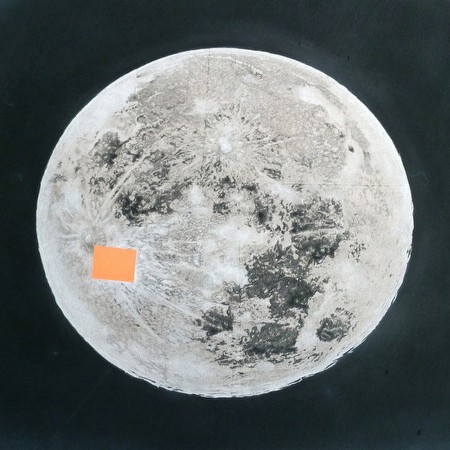
JO�O VILHENA, Deux lunes � l'autre (d�tail) 2011
Pierre noire et craie blanche sur carton gris 90 x 160 cm |
|||
|
||||
|
||||
|
JOÂO VILHENA Deux lunes à l´autre October 20 − November 15th 2011 Opening Thursday October 20th from 5pm to 10pm Following his widely noticed participation in the Salon de Montrouge and the Salon du Dessin Contemporain 2011 in Paris, João Vilhena, a Portuguese artist currently living in Nice, exhibits in Alberta Pane Gallery from October 20th to November 19th. He presents an entirely new series of large format drawings, accompanying an in situ wall painting. João Vilhena´s work is, and has always been, led by the interest he takes in the role of the beholder. For the artist a work enters into existence via the audience´s scrutiny, through the act of observation itself, which brings it to life and gives it meaning. His practice naturally oriented itself towards drawing, a particular style of drawing which he executes with unsettling precision. A virtuoso of the pencil and the word, João Vilhena feints, hides, substitutes end disguises without ever unveiling what lies beyond. To this end he uses different techniques such as optical illusions, trompe l´œls or anamorphoses, and in the works´ titles spoonerisms, anagrams and other word games. The artist´s latest obsession is with the moon, this celestial body so near and yet so far away, which may well have been the subject of mankind´s first observations and questions. For a long time Aristotle´s perception of an ideal globe, perfectly spherical and smooth prevailed. But in 1609 Galilei used a telescope of his own invention and saw it " as close as if it was barely two of earth´s radii away". He published his observations in the 1610 book Sidereus Nuncius: "Everybody is free to verify that the moon´s surface is not smooth and polished but that its surface is coarse and uneven and just as the earth, features huge bumps, profound dents and windings." This science, seeming so revolutionary and poetic from a modern perspective, has inspired João Vilhena to undertake his big diptych "Deux lunes à l´autre" (literally: "Two moons to another", a French play on words : "De l´une à l´autre" − "From one to another"), in which he revisits the image of a nineteenth century stereoscopic view from Karl Dupont. Two photographs of the moon had been taken at an interval of one month, in order to create the illusion of stereoscopic relief. Having worked on the aspect of dissimilarity between these two photographs, the artist encourages us to perpetually compare the two pictures. Furthermore he incites the spectator to continually move around his work to render the vision of the two moons, which he has deliberately distorted through his drawing techniques, perfectly spherical. The post−it, a recurrent element throughout the artist´s recent work, is a visual mnemonic which reminds us that, after all, at the centre of the work lies each spectator´s individual approach and perspective. There are some fundamental preoccupations implicit in João Vilhena works − the love of a classical technique that is slowly becoming misunderstood or relegated, the reference to memory via the evocation of a visual culture that was popular at the end of the 19th and the beginning of the 20th century, coupled with an underlying eroticism and playful language games. The result is an ensemble of drawings that invite the spectator, without whom they would be devoid of purpose, to reflect and contemplate. - Après sa participation remarquée au Salon de Montrouge et au Salon du Dessin Contemporain 2011, João Vilhena, artiste d’origine portugaise résidant à Nice, investira la galerie Alberta Pane du 20 octobre au 15 novembre 2011. Il présentera une toute nouvelle série de dessins de grand format ainsi qu’un wall drawing in situ. Le travail de João Vilhena est guidé, depuis toujours, par l’intérêt qu’il porte au rôle de celui qui contemple. Car pour l’artiste c’est bien le regard qui fait l’œuvre, qui l’active et lui donne du sens. Sa pratique s’est orientée naturellement vers le dessin, un dessin exécuté avec une précision déconcertante. Virtuose, tant du crayon que des mots, João Vilhena dupe, cache, substitue et déguise sans jamais dévoiler. Pour cela il utilise quelques « trucs » comme l’illusion d’optique, le trompe-l’œil et l’anamorphose, et dans les titres de ses œuvres, contrepèteries, anagrammes et autres jeux de mots. La nouvelle obsession de l’artiste se porte sur la Lune, cet astre à la fois si proche et si lointain, qui fut, peut-être, l’un des premiers sujets d’observation et de questionnement de l’homme. La vision d’Aristote, celle d’un globe idéal, parfaitement sphérique et lisse a longtemps prévalu. Puis en 1609, Galilée, utilisant une lunette de sa fabrication, vit la Lune « d’aussi près que si elle était à peine éloignée de deux rayons terrestres ». Il rapporta ses observations dans son livre Sidereus Nuncius publié en 1610 : « Tout le monde pourra se rendre compte que la surface de la Lune n’est pas lisse et comme polie mais que sa surface est rugueuse et inégale et que, comme la Terre elle comporte des protubérances immenses, de profonds creux et des sinuosités. » Cette science révolutionnaire et poétique —selon un point de vue actuel— a inspiré João Vilhena pour la réalisation de son grand diptyque « Deux lunes à l’autre» dans lequel il a repris l’image d’une vue stéréoscopique du dix-neuvième siècle de Karl Dupont. Deux prises photographiques de l’astre avaient été réalisées à un mois d’intervalle pour créer l’illusion de relief stéréoscopique. Ayant travaillé l’aspect de dissemblance des deux clichés de la Lune, l’artiste nous incite à comparer sans cesse les deux panneaux. De même, il nous pousse à nous déplacer dans l’espace pour rendre parfaitement sphérique la vision de ces deux lunes qu’il a expressément déformées par le dessin. Le post-it, élément récurrent dans sa production récente, est un signe visuel mémoriel qui rappelle qu’après tout, c’est le regard qui est au centre de l’œuvre. Il y a chez João Vilhena diverses préoccupations qui sont à l’œuvre dans son travail : le soin apporté à une technique devenue presque anonyme ou désubjectivisée, le rapport à la mémoire par l’évocation d’une culture visuelle populaire de la fin du XIXe et du début du XXe siècle, l’érotisme et les jeux de langage. Ce qui en résulte est un ensemble de dessins qui invitent à la réflexion et à la contemplation du regardeur, sans lequel ils ne pourraient exister. |
||||
re-title.com
International contemporary art
SIGN UP FOR NEWSLETTERS

 SIGN UP for ARTIST MEMBERSHIP
SIGN UP for GALLERY MEMBERSHIP
SIGN UP for ARTIST MEMBERSHIP
SIGN UP for GALLERY MEMBERSHIP
Click on the map to search the directory