|
Galeria Casado Santapau: Twilight of the Idols - 5 May 2010 to 5 June 2010 Current Exhibition |
||||
|
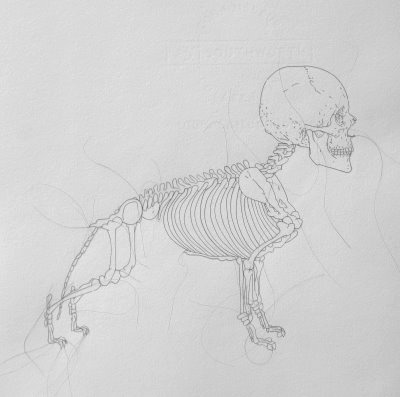
Gabriel de la Mora Human Hair on paper 21.6 x 27.9 CMS selfportrait cat
|
|||
|
||||
|
||||
|
Twilight of the Idols Curated by Ra�l Zamudio Taylor Artists: Carlos Amorales (Amsterdam/Mexico) Gabriel de la Mora (Mexico City) Emma McCagg (New York) Riiko Sakkinen (Spain/Finland) Javier Tell�z (New York/Venezuela) Abdul Vas (Madrid/Suriname) Twilight of the Idols is an exhibition of 6 international artists that work in video, painting, works-on-paper, photography, and installation. The title of the show takes its name from the similarly titled book (1888) written by Friedrich Nietzsche who, in turn, was citing Richard Wagner�s opera Twilight of the Gods (1876). Twilight of the Idols followed the Gay Science (1882) in which Nietzsche infamously pronounced that �god is dead.� After this deicide soon came other �deaths� in the late twentieth century including �the death of the author,� �the end of history,� and �the death of painting.� As such, the works in the exhibition underscore the usurpation of authority and idolatry germane to Nietzsche�s text in myriad ways: Carlos Amorales� Manimal (2005) is a post-apocalyptic digital animation where canines and avian rule the world. Or in the case of Gabriel de la Mora, science as a rational instrument of progress takes a sinister experimental turn in morphing animal to human. Transformation as signifier manifests in others ways as well including Emma McCagg�s paintings of babies seamlessly graphed onto the bodies of promiscuous adults. Riiko Sakkinen, on the other hand, undermines idols of a political nature such as dictators, corporate CEOs, and religious authorities in brutally yet visually striking installations. Javier Tell�z�s usurping of idolatry comes in the guise of the oedipal complex as underscored in his video titled Oedipus Marshall (2006). Abdul Vas also subverts idols, but in this case it is the pornographic actress Sasha Grey by way of a series of photographs that are convergence of portraiture, painting, and drawing. All the artists address the exhibition�s themes in complex and unique ways, where the idol regardless what form it takes be it political, mythical, religious or cultural, signals by way of its demise the need to reinvent new modes of salvation that can lead us out of the existential crisis that humanity finds itself in the present, global, historical moment. |
||||
re-title.com
International contemporary art
SIGN UP FOR NEWSLETTERS

 SIGN UP for ARTIST MEMBERSHIP
SIGN UP for GALLERY MEMBERSHIP
SIGN UP for ARTIST MEMBERSHIP
SIGN UP for GALLERY MEMBERSHIP
Click on the map to search the directory