|
Galeria Filomena Soares: RUI CHAFES | ANT�NIO OLAIO - 14 Mar 2013 to 25 May 2013 Current Exhibition |
||||
|
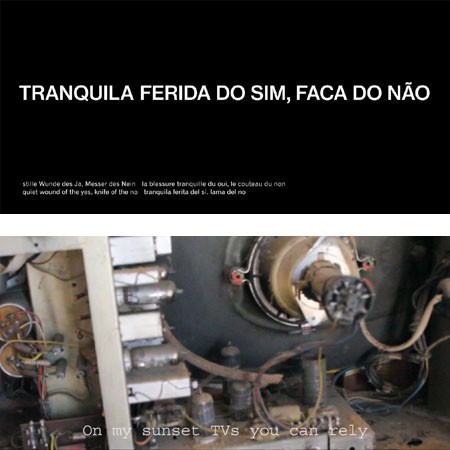
RUI CHAFES - Tranquila ferida do sim, faca do n�o
ANT�NIO OLAIO - The Sorrows of Electricity |
|||
|
||||
|
INAUGURAÇÃO | OPENING 14 Março, quinta-feira, 21:30 | March 14th, thursday, 9:30 pm 14.03 - 25.05.2013terça - sábado 10:00 / 20:00 | tuesday - saturday 10 am / 8 pm RUI CHAFES Tranquila ferida do sim, faca do não Galeria Filomena Soares apresenta a exposição individual de Rui Chafes (Lisboa, Portugal, 1966), intitulada Tranquila ferida do sim, faca do não. A inauguração no dia 14 de Março contará com a presença do artista e a exposição irá estar patente até o dia 25 de Maio. «Um espaço, dependendo da sua estrutura geométrica, poderá ser investido de uma dimensão sacral que, normalmente, está ocultada. Muito mais difícil do que enchê-lo é esvaziá-lo, virá-lo do avesso, operar a sua inversão de forma a aproximá-lo do “quase nada”, do “antes do nada”. Torná-lo magro, como queria, desesperadamente, Alberto Giacometti. Um espaço austero, de redução e ascetismo, de total despojamento e esvaziamento. Não podemos ter medo do vazio, do silêncio e da ferida. A dimensão abstracta da religião passa, também, por essa coragem. Trata-se de encher o vazio com o vazio, não de o encenar. Cada escultura é um núcleo cerrado, retraído, fechado para dentro, obscuro, concentrado; um espaço vazio, de clausura, uma prisão fechada sobre si mesma. Cada uma é um cárcere vazio, onde a luz se dissolve nas estreitas frinchas que definem a sua estrutura: uma concentração de escuridão que absorve a luz e o espaço. As suas escuras fendas são feridas íntimas, entradas íntimas para a obscuridade do corpo. Uma escultura, no seu retraído formalismo e na sua impessoalidade icónica, cria um lugar hierático e rígido, um núcleo de redução, austeridade e ascetismo, uma transcendência através da depuração, da pobreza próxima da essência. Ausência de encenação: o vazio dentro do vazio. Ela não é só um objecto, é, também, a sua relação com o nosso corpo, a escala do confronto entre a nossa dimensão e o seu tamanho. Faz-nos pensar, também, a distância que percorremos até chegar ao pé dela, o tempo que demoramos, a consciência total do espaço que atravessamos e que, havendo a necessária coragem e confiança, nos levará a saber que “a primeira coisa a morrer são os olhos”.» Rui Chafes Lisboa, Fevereiro 2013 __ Galeria Filomena Soares presents a solo exhibition of Rui Chafes (1966, Lisbon, Portugal), entitled Quiet wound of the yes, knife of the no. The opening on March 14th, will count with the presence of the artist and the exhibition will be open to public until May 25th. «A space, depending on its geometric structure, might be invested by a sacred dimension that would normally be out of sight. A lot harder than filling such a space up, would be to void it, turning inside out. To operate its inversion in order to bring it closer to the “almost nothing”, to the “before nothingness”. Thinning it, the way Alberto Giacometti desperately wanted to. An austere space, of reduction and asceticism, of stripping and of emptying. We cannot fear emptiness, silence or the wound. The abstract dimension of religion also goes through that same courage. It's about filling up emptiness with emptiness,- not pretending to do so. Each sculpture is a closed nucleus, retracted, shut to the inside, obscure, concentrated; an empty space of enclosure, a prison locked on itself. Each one is a vacant cell, where light dissolves itself through the narrow openings that define its structure; a concentration of darkness that absorbs both light and space. Its dark crevices are intimate wounds, intimate entrances for the obscurity of the body. A sculpture, in its retracted formalism and its iconic impersonality, creates a hierarchical and rigid place, a core of reduction, austerity and asceticism, a transcendence through purification, of the maximum poverty close to the essence. Absence of performance; the void inside the void. It is not merely an object, it's also its relation with our body, the scale of the confrontation between it and our own magnitude. Causing us to reflect also on the distance we walk until we reach it, and that, summing up the right amount of courage and confidence, will lead us to the knowledge that “the first thing to die is the eye.» Rui Chafes Lisbon, February 2013 ANTÓNIO OLAIO The Sorrows of Electricity Galeria Filomena Soares apresenta a exposição individual do artista António Olaio (Sá da Bandeira, Angola, 1963), intitulada The Sorrows of Electricity. A inauguração no dia 14 de Março contará com a presença do artista e a exposição irá estar patente até o dia 25 de Maio. A mostra composta por uma instalação composta por 11 pinturas individuais e um vídeo – “Sunset TVs” – retoma algumas dos interesses que o artista tem vindo a desenvolver ao longo dos anos. Referências ao universo Pop e a objectos do quotidiano contemporâneo em pinturas de narrativas abstractas e delirantes fazem da obra do artista uma reflexão sobre os modos de ver e de olhar para a realidade que nos rodeia. Através do uso icónico da televisão, vista como um dispositivo de luz artificial que filtra de modo tendencioso o que dá a ver, o artista questiona os meios de divulgação e de propagação da informação visual. Vídeos, pinturas, músicas e ocasionalmente performance retratam irónica e cinicamente as pessoas e as suas vivências e relações com os lugares que habitam e com os seus objectos predilectos. O tom melancólico da canção que dá nome ao vídeo “Sunset TVs”, e de pinturas como “Unplugged Mary”, “Where Paris used to be”, “Gaslight shadows” ou mesmo, de uma forma mais enigmática, “Yellow birds in the shade”, traduz a relação com a realidade como sendo uma espécie de sedimentação de obsolescências, um presente que se devora a si próprio, enquanto antecipação da sua condição de já não ser. Em The Sorrows of Electricity a celebração da luz artificial (Graças à Luz Eléctrica, na Cooperativa Árvore no Porto, foi o título de uma exposição de António Olaio nos anos 80) dá lugar à sugestão da possibilidade do próprio artifício da electricidade poder experimentar a mágoa, ou mesmo os desgostos, na relação entre o sentimento e a realidade. Aqui os sentimentos são afirmados enquanto substantivos, aproximando-se da condição de coisas. E tristes serão as televisões, esses dispositivos alternativos às janelas, ou mesmo a electricidade que lhes corre nas veias. Menosprezo do sentimento dos humanos, ou mesmo dos artistas? Certamente, mas talvez sobretudo porque assim as coisas são bem mais interessantes. A afirmação “On my sunset TVs you can rely” traduz uma crença que se desloca para o artifício, uma estranha reabilitação da idolatria. Não atinge propriamente o alcance metafísico da fé, mas a mera possibilidade de poder confiar nestes objectos. Só a mera circunstância de poder confiar no facto de existirem já é alento suficiente. E, transformada ou apresentada enquanto experiência estética, até pode passar por uma estupenda manifestação de júbilo. __ Galeria Filomena Soares presents a solo exhibition of the Portuguese artist António Olaio (1963, Sá da Bandeira, Angola), entitled The Sorrows of Electricity. The opening on March 14th, is the presence of the artist and the exhibition will be open until may 25th. The exhibition consists of an installation composed of 11 individual paintings and a video - "Sunset TVs" - takes some of the interests that the artist has been developed over the years. References to the universe Pop and contemporary everyday objects in paintings of abstract and delusional narratives make the artist’s work a reflection on the ways of seeing and looking at the reality that surrounds us. Through the use of iconic television, seen as a device of artificial light that filters so what gives biased view, the artist questions the means of dissemination and spread of visual information. Videos, paintings, music and occasionally performance ironic and cynical portraying people and their experiences and relationships with the places they inhabit and their beloved objects. The melancholy tone of the song that gives name to the video "Sunset TVs", and paintings like "Unplugged Mary", "Where Paris used to be", "Gaslight shadows" or even, in a more cryptic way, "Yellow birds in the shade”, translates the relationship with reality as a kind of sedimentation of obsolescence, a gift that devours itself, while anticipating they condition of no longer to be. In The Sorrows of Electricity celebration of artificial light (Graças à Luz Eléctrica, in the Cooperativa Árvore in Porto, was the title of an exhibition of António Olaio in the 80’s) gives rise to the suggestion of the possibility of the own electricity artifício to experience the hurt, or even dislikes, at the relationship between feeling and reality. Here the feelings are affirmed as nouns, approaching them to the condition of things. And televisions will be sad, those alternative devices to windows, or even electricity to them veins. Disregard of human sentiment, or even the artists? Certainly, but perhaps especially because things are so much more interesting. The statement "On my sunset TVs you can rely" reflects a belief that moves the device, a strange rehabilitation of idolatry. Not exactly reaches the range of metaphysical faith, but the mere possibility of being able to rely on these articles. Just the mere fact of being able to rely on the fact they exist is already sufficient encouragement. And, processed or presented as an aesthetic experience, can even pass a stupendous manifestation of joy. |
||||
|
||||
re-title.com
International contemporary art
SIGN UP FOR NEWSLETTERS

 SIGN UP for ARTIST MEMBERSHIP
SIGN UP for GALLERY MEMBERSHIP
SIGN UP for ARTIST MEMBERSHIP
SIGN UP for GALLERY MEMBERSHIP
Click on the map to search the directory