|
Chambers Fine Art Beijing: According to Zhao Zhao: Recent Works - 10 Sept 2011 to 23 Oct 2011 Current Exhibition |
||||
|
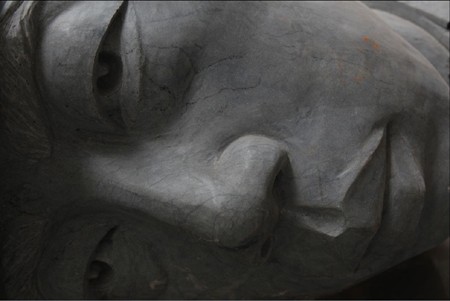
Zhao Zhao, Officer, 2011
Limestone 860�180�180 cm |
|||
|
||||
|
||||
|
According to Zhao Zhao: Recent Works September 10 - October 23, 2011 Reception: Saturday, September 10, 3:00 - 6:00 pm Chambers Fine Art is pleased to the opening of According to Zhao Zhao: New Works on September 10, 2011. After graduating from the Xinjiang Academy of Fine Arts in Urumqi, he moved to Beijing in 2004 and soon encountered Ai Weiwei whom he has assisted in many capacities, beginning with the video Beijing: Chang ’an Boulevard and continuing until today During this crucial period, however, he also worked independently in a range of media that included video, photography, performance and object–making, gaining a semi-underground reputation as one of the most provocative artists of his generation. Unwilling to be pinned down to one medium or theme, he operated in many different locations that ranged from a gallery space in the Dashanzhi Art District (798) to East Tianshan Mountain, Xinjiang. For the current exhibition, he has focused on ways in which his pragmatic approach, responding to circumstances as they arise and without any preconceived technical or formal approach might be modified to create a new body of work that is more thematically consistent. This is the thinking behind the new series of Ping Pong paintings and the Officer sculptures, both themes that resonate deeply in contemporary Chinese society, albeit in different ways. For his return to painting, Zhao embraces a subject matter dear to the heart of the Chinese people, a sport in which they excel. The large, colorful paintings of ping pong reduce this fast-moving sport to a generalized, heraldic presentation of the paddles and ball used in the game. Like the rules of the game itself, they are orderly and consistent. In contrast to the calm presentation of the paintings is the random nature of the Officer sculptures, scattered over the floor of the gallery. Using his own features for the figure of the officer standing at attention, he imagines how it might look many years later after it has been displaced from its pedestal. The sculptures may also be seen as a reflection on the practice of sculpture and the fate of public sculpture throughout history. Until now, Zhao Zhao’s three-dimensional objects have responded in various ways to the Duchampian tradition of the Ready Made but with his Officer he works in the traditional way that dates back to the Han Dynasty (206 BC – 220 AD), working with craftsmen in the quarries at Quyang, the biggest site for the production of sculpture in China. Although apparently dissimilar, the two bodies of work complement each other in the way in which they offer simultaneously a commentary on the physical characteristics of painting and sculpture as traditionally conceived and on aspects of life in China today. According to Zhao Zhao, this is the way things are, whether we like it or not. |
||||
re-title.com
International contemporary art
SIGN UP FOR NEWSLETTERS

 SIGN UP for ARTIST MEMBERSHIP
SIGN UP for GALLERY MEMBERSHIP
SIGN UP for ARTIST MEMBERSHIP
SIGN UP for GALLERY MEMBERSHIP
Click on the map to search the directory