|
Galerie Barbara Thumm: Teresa Burga \ Anna Opperman - 2 June 2012 to 4 Aug 2012 Current Exhibition |
||||
|
|
|||
|
||||
|
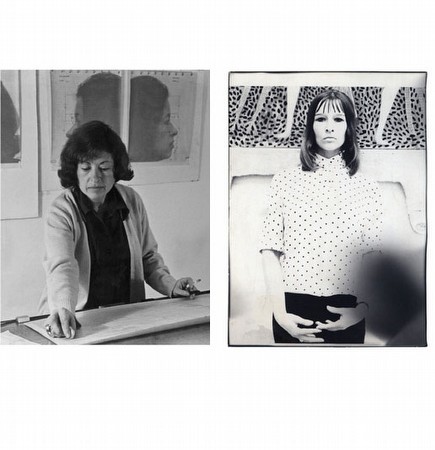
Teresa Burga Anna Opperman 02.06. - 04.08.2012 Eröffnung: Freitag, den 1. Juni 2012, 19 - 21 Uhr Opening: Friday 1 June 2012, 7 - 9 pm Im Rahmen der Ausstellung von Teresa Burga und Anna Oppermann findet am Samstag, den 2. Juni 2012, um 17 Uhrein Gespräch mit Teresa Burga (Künstlerin), Miguel A. Lopéz (Kurator), Ute Vorkoeper (Kuratorin) und Iris Dressler (Württembergischer Kunstverein) in der Galerie Barbara Thumm statt. In the course of the exhibition by Teresa Burga and Anna Oppermann take place on Saturday, June 2, 2012, at 5 pma talk with Teresa Burga (artist), Miguel A. Lopéz (curator), Ute Vorkoeper (curator) and Iris Dressler (Württembergischer Kunstverein) at the Galerie Barbara Thumm. Press release: (please scroll down for English version) Mit Teresa Burga (geboren 1935 in Peru) und Anna Oppermann (geboren 1940 in Eutin und 1993 verstorben), stellt die Galerie Barbara Thumm zwei Künstlerinnen vor, die in den 70er Jahren jede auf ihre Weise, künstlerische Praxis methodisch neu definiert haben. Beide Positionen gelten heute für aktuelle Entwicklungen als richtungsweisend, wenn es um die Frage geht, wie der Umgang mit Subjektivität zu gesellschaftsrelevanten Ansätzen führen kann. Am Samstag, den 2. Juni um 17 Uhr diskutieren Teresa Burga, Miguel A. Lopéz (Kurator), Ute Vorkoeper (Kuratorin) und Iris Dressler (Württembergischer Kunstverein) über die Relevanz dieser spezifischen Methoden heute. Das Gespräch findet in der Galerie statt. Das zentrale Thema der künstlerischen Arbeit von Anna Oppermann ist das Sichtbar- und Erfahrbarmachen der Komplexität des Wahrnehmens und Reflektierens in sogenannten Ensembles. Ute Vorkoeper, Spezialistin des Werkes von Anna Oppermann schreibt: "In der Galerie Barbara Thumm wird erstmals öffentlich das Ensemblekonvolut Theorie der Gefühle gezeigt – ab 1981 in Paris entstanden - zusammen mit Fotoarbeiten, die ihre sukzessive, im künstlerischen Tun entwickelte Methode zeigen und mit einem ebenfalls erst posthum entdeckten Selbstporträt-Komplex präsentiert werden. Die fotografischen Selbstporträts in wechselnden Posen, Maskeraden und sich verschiebende Bildarrangements entstanden von Mitte der 1960er bis Mitte der 1970er Jahre. Sie wurden von der Künstlerin zusammengelegt bewahrt, aber niemals öffentlich gemacht." Die Galerie repräsentiert seit Frühjahr 2010 den Nachlass von Anna Oppermann und freut sich, bekannt zu geben, dass Anna Oppermann an der 30. Biennale in Sao Paulo dieses Jahr teilnehmen wird. Im Museum Abteiberg ist derzeit die Arbeit Künstler Sein als Neuankauf präsentiert. Mit Teresa Burga zeigt die Galerie eine Ausnahmekünstlerin, die innerhalb des lateinamerikanischen Kunstdiskurses (1935 in Iquitos, Peru geboren) bis heute eine Ausnahmestellung inne hat. "Burga entwickelte ihre Pop-Art- und Konzeptkunst seit den 60er Jahren in einem Land, das zwischen 1968 und 1980 von einem nationalistischen Militärregime regiert wurde; und musste zunächst erhebliche Hürden überwinden, um ausgestellt und somit wahrgenommen zu werden. Auf diesem Parallelweg entwickelte Burga in den 70er Jahren in einer umfangreichen Serie von Zeichnungen, Skizzen und Installationen ihre Methode zur Konstruktion der Subjektivität durch die Anwendung von Gestik und Wiederholungen." Mit ihrem weit gefächerten Projekt Autorretrato – das Zeichnungen, Objekte, Installationen, audiovisuelle sowie interaktive Arbeiten umfasst - betrieb die Künstlerin nicht nur eine ironische Reflektion über die traditionelle, bildhafte Konzeption des "Selbstportraits" sondern auch eine kritische Reflektion über die Standardisierungsprozesse des Subjekts. (Miguel A. Lopéz) In Europa wurde Teresa Burga zuletzt 2011 mit einer umfassenden Retrospektive unter dem Titel Die Chronologie der Teresa Burga. Berichte, Diagramme, Intervalle im Württembergischen Kunstverein präsentiert und ebenfalls in 2011 auf der 12. Istanbul Biennale. Die Galerie wird Teresa Burga auf der frieze Masters im Herbst mit einer Solopräsentation zeigen. Die Gegenüberstellung dieser künstlerischen Positionen von Oppermann und Burga steht für einen Bereich, dem sich die Galerie Barbara Thumm unter anderen widmet, und die im Kontext einer Wiederentdeckung und Neubewertung konzeptueller und avancierter Kunstpraktiken der 1960er bis 1980er-Jahre steht. __ Gallery Barbara Thumm is presenting two female artist, Teresa Burga (born 1935 in Peru) and Anna Oppermann (born 1940 in Eutin deciesed 1993), who have redefined artistic practice in the seventies. Both positions, each in their own way, are still and more than ever highly influential in contemporary discourses about subjectivity and social relevance of artistic production. On Saturday, the 2nd of June, 5 pm, there will be a talk in the gallery about these two specific methodologies and their contemporary relevance. The invited speakers are: Teresa Burga, Miguel A. Lopéz (curator), Ute Vorkoeper (curatorin) und Iris Dressler (Württembergischer Kunstverein). Since the mid-1960s Oppermann had concerned herself with facets of and shifts in gazes, attitudes, light cast on human positions, relationships and problems, and had presented the complexity of perception and reflection in ways that could be directly seen and experienced in her so-called ensembles. As Ute Vorkoeper who is an expert for Oppermanns oeuvre, writes: "The ensemble Theory of Emotions, is now publicly exhibited for the first time in the Galerie Barbara Thumm – together with photographic work documenting the ways in which Anna Oppermann reflected on her method, which developed gradually through the artistic process of creation, and together with a group of self-portraits also only discovered posthumously. These photographic self-portraits in different poses, disguises and shifting arrangements were created from the mid-1960s to the mid-1970s. The artist herself kept them together as a group, but they were never made public. However, the artist’s shifts in role and perspective – sometimes drastic, sometime subtle – are so remarkable and touching that we have taken the decision to publish them posthumously. Since spring 2010 gallery Barbara Thumm is representing the estate of Anna Oppermann. They are pleased to announce that Oppermann will be part of the 30th Sao Paulo Biennial this autumn. The museum Abteiberg is currently displaying the new aquisition Künstler Sein. To this day, the work of Teresa Burga (Iquitos, 1935) holds an exceptional position within Latin American discourse on art. From the 1960s onwards, Burga developed her pop and conceptual art in a country that was ruled by a nationalist military regime between 1968 and 1980, and thus at first she had to overcome significant obstacles in order to exhibit and become known. Accordingly, her artistic endeavours took a path parallel to populist demands of the time for a "Peruvian national" art. On this parallel course, in an extensive series of drawings, sketches and installations completed during the 1970s, Burga developed her method of constructing subjectivity using gestures and repetition. Her most important exhibition of this time was Autorretrato. Estructura. Informe. 9.6.72 (Self-portrait. Structure. Report. 1972). In this wide-ranging project, the artist used her own body to create a medical map of herself – using drawings of her profile and photographs of her face, an ECG and a light that displayed her cardiac function, and a biochemical haemanalysis. Autorretrato not only was and is an ironic reflection on the traditional, pictorial concept of the "self-portrait", but also engages critically with processes that seek to standardise the subject. Teresa Burga was recently presented in an extensive retrospective, Die Chronologie der Teresa Burga. Berichte, Diagramme, Intervalle at Württembergischer Kunstverein in the autumn 2011, as well as in the 12th Istanbul Biennial 2011. The juxtaposition of these two artists Burga and Oppermann is indicative for the programmatic interest of gallery Barbara Thumm to re-look and evaluate groundbreaking conceptual artist practice from th 1960ies to 1980ies and to reposition them into contemporary practice. |
||||
|
||||
re-title.com
International contemporary art
SIGN UP FOR NEWSLETTERS

 SIGN UP for ARTIST MEMBERSHIP
SIGN UP for GALLERY MEMBERSHIP
SIGN UP for ARTIST MEMBERSHIP
SIGN UP for GALLERY MEMBERSHIP
Click on the map to search the directory