|
Galer�a Helga de Alvear: Helena Almeida - Ba�ada en l�grimas - 16 Sept 2010 to 30 Oct 2010 Current Exhibition |
||||
|
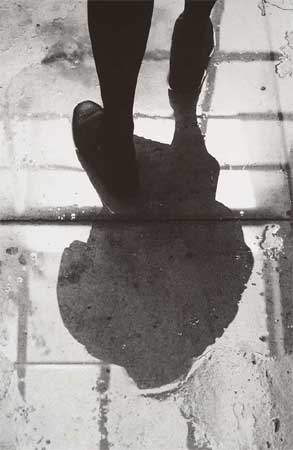
Ba�ada en l�grimas #1, 2009. Black and White photograph
|
|||
|
||||
|
||||
|
Helena Almeida Ba�ada en l�grimas Galer�a Helga de Alvear September 16 - October 30 2010 Opening hours: 11:00 to 14:00 and 16:30 to 20:30 h. Opening: Thursday September 16th 2010, 20:00 h. Galer�a Helga de Alvear presents the new series of works by Helena Almeida (Lisbon, 1934), "Drowned in Tears". During the past 40 years, the artist has developed a unique and personal artistic language of great coherence, establishing an exceptionally solid professional career. Her career began in 1970s, and moves across inter-disciplinary limits, although she is neither a performance artist nor a photographer, her work however does consists in photographing actions which she always executes in her studio. She also goes beyond the limits of body art and conceptual art, unable to fit exclusively into any of these. Helena Almeida turns the image of herself into the centre and main motif of her work, while still maintaining that it is not "her" that appears in the pictures. Therefore, these are no self-portraits. The body becomes the medium and the tool for the art work. The creative process starts with the sketches, where she specifies everything: from the pose to the wardrobe, or the objects that appear in the picture. Her husband, architect Artur Rosa, takes the photos, which contributes to maintaining the works intimate nature. Typically the photographs are in black-and-white on which, occasionally the artist paints areas in colour, red or blue, or sometimes incorporating three-dimensional elements. She has harnessed this in order to simultaneously question the traditional artistic medium, and to reclaim her own line of research. On a rainy day, the artist entered her studio, only to find it flooded. At first, she rushed to drain out the water, but, while doing this, she was hypnotized by what she saw on the floor; which was the effect of the water acting as a mirror. From that moment onwards, she started producing sketches, where she developed the ideas she had experienced. In these new pieces, we find three new coordinates: the stain, the shadow, and the reflection. The water stain creates a new landscape, deforming and transforming the real, undoing it; the shadow which replaces the artist's physical presence, and turns it into an abstraction which is deformed; and the reflection which reproduces reality without intentionally becoming real. |
||||
re-title.com
International contemporary art
SIGN UP FOR NEWSLETTERS

 SIGN UP for ARTIST MEMBERSHIP
SIGN UP for GALLERY MEMBERSHIP
SIGN UP for ARTIST MEMBERSHIP
SIGN UP for GALLERY MEMBERSHIP
Click on the map to search the directory