|
David Zwirner, 533 West 19th Street: THOMAS RUFF - 9 Nov 2007 to 22 Dec 2007 Current Exhibition |
||||
|
THOMAS RUFF
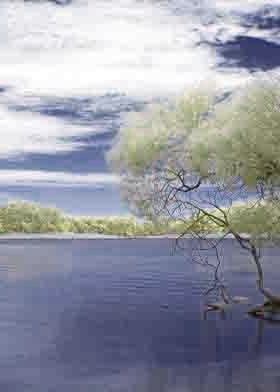
Jpeg lir01, 2007 C-Print with Diasec, 100 x 74.02 inches 254 x 188 cm |
|||
|
||||
|
||||
|
Opening on November 9, 2007, David Zwirner is pleased to present an exhibition of new work by German artist Thomas Ruff. This will be the artist�s fifth solo exhibition at the gallery. In 2007, Ruff was the subject of two one-person museum exhibitions at Moderna Museet, Stockholm, Sweden and the Sprengel Museum, Hannover, Germany. His numerous group exhibitions recently include Depth of Field: Modern Photography, The Metropolitan Museum of Art, New York, NY; What does the jellyfish want? Photographs from Man Ray to James Coleman, Museum Ludwig, Cologne, Germany; Fast Forward: Collections for the Dallas Museum of Art, Dallas Museum of Art, Dallas, TX (all 2007); Desacogedor: Escenas fantasmas en la sociedad global, La Bienal Internacional de Arte Contempor�neo de Sevilla, Seville, Spain; Super Vision, Institute of Contemporary Art, Boston, MA; and Ecotopia: The Second ICP Triennial of Photography and Video, International Center of Photography, New York, NY (all 2006). He was the 2006 recipient of the Infinity Award for Art presented by the International Center of Photography, New York, NY. In this exhibition, Ruff continues to explore the distribution and reception of images in the digital age through his jpeg series. Using JPEGs (the standard compression files for Internet images) culled primarily from the World Wide Web, Ruff attempts to create a visual lexicon or encyclopedic compendium of contemporary history, cataloguing locations, events, and natural phenomenon. Enlarged by the artist to gigantic scale, the JPEGs become geometric displays of color; the exaggerated pixel patterns leave the image nearly unrecognizable from close view. Much like Impressionist paintings, these photographs require the viewer to stand at a distance in order to make a visual assessment of the image content. The distinct modes of viewing � close, mid-range, and far � integral to fully processing the works, challenge viewers to examine the way they look at images in the art context and the everyday. Further, instead of straightforwardly titling the works to communicate their historical and geographic reference points, Ruff employs acronyms, calling upon viewers to decode and determine meaning. An extension of Ruff�s interest in the mechanical production of images and their subsequent degeneration (as in his nudes and substrat series), the jpeg series draws attention to the abstraction that occurs when familiar images are digitized and distributed via the Internet. How this degeneration and the ensuing proliferation affect our understanding of and reaction to images � whether beautiful or repulsive, well-known or unrecognizable � is at the root of Ruff�s exploration. Ruff actively engages the history of landscape painting, with many works in the series focusing on idyllic, seemingly untouched landscapes, and conversely, scenes of war and nature disturbed by human manipulation. Visible pixel lines are embedded in the images by the overlaid grid of the file, often creating a juxtaposition of biomorphic and geometric shapes, suggesting both the possibilities and limitations of technology to alter nature and human relationships. Pastoral landscapes, architectural monuments, scientific achievements, and devastating disasters all succumb to digitization, becoming testaments to the effects of computers on the medium of photography, and, more importantly, on our collective memory. Ruff attempts to restore objectivity to photography and image making; however, his brand of photographic objectivity is not that purportedly practiced by photojournalists. Rather, it is elicited by scanning the mundane for the telling particulars of aggregated detail, and by a reserved and skeptical curiosity towards photography�s ultimate truthfulness. Like Ruff�s oversized, deadpan portraits, his unmediated shots of commonplace interiors, and his evocative nudes borrowed from pornographic websites, the jpeg series further illustrates the artist�s insistence that photographs capture merely �the surface of things.� Despite the often provocative image content, these jpeg works� conceptual premise lies in the production of each image rather than a specific subject matter. Through repetition, Ruff thereby focuses on the process of abstraction using a photographic document and leaves the final interpretation to the viewer. |
||||
re-title.com
International contemporary art
SIGN UP FOR NEWSLETTERS

 SIGN UP for ARTIST MEMBERSHIP
SIGN UP for GALLERY MEMBERSHIP
SIGN UP for ARTIST MEMBERSHIP
SIGN UP for GALLERY MEMBERSHIP
Click on the map to search the directory