|
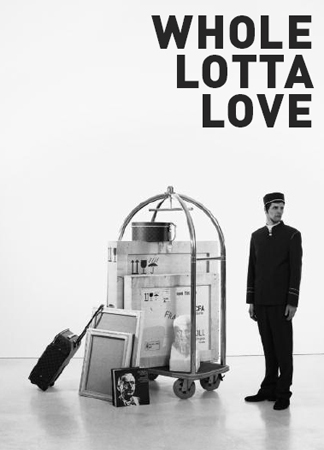
Contemporary Fine Arts Berlin : Whole Lotta Love. You' re just too good to be true - 21 June 2008 to 16 Aug 2008 Current Exhibition |
||||
|
David Lieske
Commission # IV (CFA) (I - VIII # I) , 2008 silkscreens on paper , 90.2 x 67.8 cm |
|||
|
||||
|
||||
|
"Whole Lotta Love. You' re just too good to be true" Contemporary Fine Arts freut sich, die Gruppenausstellung �Whole Lotta Love. You're just too good to be true� anzuk�ndigen, die vom 21. Juni bis 16. August 2008 stattfinden wird. Es werden Arbeiten von Georg Baselitz, Monica Bonvicini, Jake und Dinos Chapman, Angus Fairhurst, David Lieske, Sarah Lucas, Albert Oehlen, Jonathan Meese, Daniel Richter, Katja Strunz und Andreas Slominski gezeigt. Fungiert der Ausstellungstitel �Whole Lotta Love�, welcher den Led Zeppelin-Hit von 1969 zitiert, einerseits als Respekts- oder Liebesbekundung an die teilnehmenden K�nstler und K�nstlerinnen, so diente er zugleich auch als einzige �kuratorische� Vorgabe. Ein Muss war die Arbeit �Led Zeppelin is for Poofs III� von Sarah Lucas (2002), einem �ber dem Boden schwebenden phallisch anmutenden Beton-Zeppelin, in welchem die K�nstlerin ihrer Hassliebe zu der britischen Rockband fr�nt und den Machismo der Texte von Robert Plant und Jimmy Page konterkariert. Way, way down inside, I'm gonna give you my love, Wanna whole lotta love? Jake und Dinos Chapman verfremden viktorianische Portraits. Jene dienten im 19. Jahrhundert dazu, Reichtum und Ehrenhaftigkeit der britischen Oberschicht darzustellen. �One day you�ll no longer be loved� lautet der resignierte Titel des Bildes in der Ausstellung. Denn das Alter macht vor Reichtum und Stand eben keinen Halt. Auch der Konzeptk�nstler David Lieske, der ebenfalls die Ausstellungsplakate und Einladungskarte konzipierte, besch�ftigt sich in seiner vielteiligen Arbeit �Erotic Art (the individual problem)� mit der erotischen Seite der Liebe. Ein von ihm beauftragter Zeichner pornografischer Comics fertigte Abbilder von Lieskes Installationsansichten an und kombinierte sie mit nackten M�nnerfiguren. Das Ergebnis fotografiert Lieske wiederum ab, arrangiert die Aufnahmen neu und schlie�t somit den k�nstlerischen Reproduktionskreislauf. Albert Oehlens Dame auf dem Werk Song X wirkt zun�chst wie die Gitarristin vom Flamencokurs der Volkshochschule. Hinter ihrem unschuldigen L�cheln blinzelt jedoch das wilde Wissen um das unvergleichliche, legend�re Riff aus Whole Lotta Love durch. Robert Plant: �Egal wo es herkommt, es hing alles an diesem Riff�. Jimmy Page: �Das absteigende Riff habe ich mit einer slide aus Metall und R�ckw�rtsecho gemacht. Ich glaube, damit war ich der Erste.[...]�. Zeppelin�hnliche, unheimliche Flugobjekte tauchen ebenso in Song X auf. Georg Baselitz kopiert in den drei Portraits seiner Frau Elke den visuellen Effekt von Fotonegativen, welche in Zeiten der Digitalisierung als l�ngst �berholtes Medium gelten. So schwingt die der Liebe eingeschriebene Trauer um Verg�nglichkeit in diesen Bildern vielschichtig mit. Die Portraits von Elke sind, neben malerischen Probleml�sungen, fortw�hrende Liebeserkl�rungen an seine Frau, die ihm seit nunmehr 50 Jahren als Modell dient. You�e been learnin, baby, I been learnin, All the good times, baby, baby, I�ve been yearnin, �.. I�m gonna give you my love Der K�nstler Andreas Slominski konterkariert in seinen Arbeiten aus Styropor die an eine �sthetik der 1950er Jahren angelehnte bildliche Darstellung von Sehnsucht und Fernweh. Indem er in seinen gro�formatigen Collagen eine grelle Farbigkeit und naive Formgebung mit dem k�nstlichen Material des Styropors verbindet, treibt er die allgemein bekannten klischeehaften Darstellungen auf die Spitze. Das Whole lotta wird hier repr�sentiert durch ein - f�r den sogenannten guten Geschmack - verst�rendes �Zuviel� an Farbe und Material. Monica Bonvicini zitiert auf ihren gro�formatigen Papierarbeiten - auf dem Hintergrund von vom Wirbelsturm Katrina zerst�rter H�user in New Orleans - Gedichtfragmente von Dorothy Parker ...and if I love you Wednesday so what is that to do� �I don�t love you Thursday so much is true� In der f�r seine fr�hen Werke charakteristischen Art und Weise bemalt und verfremdet Jonathan Meese Vorlagen, die er aus unterschiedlichen Publikationen extrahiert. Indem er diese Vorlagen durch Texte und Bilder aus seiner eigenen Vorstellungswelt erg�nzt, bricht er ihren urspr�nglichen Sinngehalt. Meeses Werk ist eine Assemblage tradierter historischer, religi�ser und mythischer Zeichen und Bilder. In der gro�en, begehbaren Installation dieser Ausstellung kombiniert Meese Collagen aus fr�heren Arbeiten und verbindet hier Liebe und Gewalt zu einem morbiden Ganzen, dessen Zentrum ein neues, seiner Mutter gewidmetes Triptychon mit dem Titel �MUTTCHEN DON MEESELS PISSGELBE PENNST�TTE PENNTS WEG. (A.d. Large)� bildet. Die ausgestellten Arbeiten verbindet vor allem die Skepsis gegen�ber kanonischen Idealvorstellungen von Liebe und phallischer Selbst�bersch�tzung, die seit Jahrzehnten Songs wie die von Frankie Valli und Led Zeppelin in die Charts katapultiert haben. Contemporary Fine Arts widmet die Ausstellung dem im Fr�hjahr diesen Jahres freiwillig aus dem Leben geschiedenen K�nstler Angus Fairhurst. Er war - um das von ihm sogeliebte Lied von Franki Valli zu zitieren - �just too good to be true�. "Whole Lotta Love. You' re just too good to be true" Contemporary Fine Arts is pleased to announce the group show �Whole Lotta Love. You�re just too good to be true� taking place from June 21 to August 16, 2008. The exhibition includes works by Georg Baselitz, Monica Bonvicini, Jake und Dinos Chapman, Angus Fairhurst, David Lieske, Sarah Lucas, Albert Oehlen, Jonathan Meese, Daniel Richter, Katja Strunz, and Andreas Slominski. The title, �Whole Lotta Love�, quoting the hit by Led Zeppelin of 1961, is on the one hand an avowal of love and respect to the participating artists, while at the same time being the only set �curatorial� parameter. The work �Led Zeppelin is for Poofs III� by Sarah Lucas from 2002 was a must: a phallic-shaped concrete Zeppelin with which the artist indulges her hate-love relationship to the British rock band, countering the machismo of the texts by Robert Plant and Jimmy Page. �Way, way down inside, I'm gonna give you my love, Wanna whole lotta love?� Jake and Dinos Chapman alter Victorian portraits. These served the purpose of representing the wealth and respectability of the British upper classes. �One day you�ll no longer be loved� is the rather resigned title of the painting in this exhibition. Because time pays no heed to wealth or status. In his multi-part work �Erotic Art (the individual problem)� the conceptual artist David Lieske, who also designed the exhibition posters and the invitation, addresses the erotic side of love. He commissioned a pornographic cartoon artist to draw representations of Lieske�s installation views and combine them with nude male figures. Lieske in turn photographed the results and rearranged the images, thus completing the artistic reproduction cycle. At first sight, Albert Oehlen�s lady in �Song X� seems like the guitarist from a flamenco class at the local adult education centre. Behind her innocent smile, however, the wild knowledge of the incomparable legendary riff from �Whole Lotta Love� shines through. Robert Plant: �Page�s riff was Page�s riff. It was there before anything else.� Jimmy Page: �I did the descending riff with a metal slide and backwards echo. I think I came up with that first...� Zeppelin-like, mysterious flying objects also appear in �Song X�. In the three portraits of his wife Elke, Georg Baselitz copies the visual effect of photographic negatives, which in the age of digitalisation are considered an outmoded medium. Thus an echo of mourning the transitory that is always already inscribed in love, resonates within these images. The portraits of Elke are, quite apart from painterly problem solutions, continuous declarations of love to his wife, who has been his model for some 50 years now. �You�ve been learnin, baby, I been learnin, All the good times, baby, baby, I`ve been yearnin,�.. I�m gonna give you my love� In his Styrofoam works, the artist Andreas Slominski demonstrates how a repertoire of clich�s is often used in the visual representation of love. By combining garish colours and naive shapes with the artificiality of the material Styrofoam in his large installations, he carries the generally known clich�d representations of love to an extreme. In her large works on paper Monica Bonvicini quotes � before the background of houses destroyed by the hurricane Katrina in New Orleans � poem fragments by Dorothy Parker: �...and if I love you Wednesday so what is that to do�� ��I don�t love you Thursday so much is true�� In a manner characteristic for his early works, Jonathan Meese paints on and alters models that he extracts from various publications. By supplementing these models with texts and images from the world of his own imagination, he fractures their original meaning. Meese�s work is an assemblage of traditional historical, religious, and mythical signs and images. In the large accessible installation in this exhibition, Meese combines collages from earlier works and merges love and violence into a morbid whole, at the centre of which stands a new triptych, dedicated to his mother and entitled �MUTTCHEN DON MEESELS PISSGELBE PENNST�TTE PENNTS WEG. (A.d. Large)�. The works in this exhibition share above all a scepticism towards canonical ideal notions of love and phallic overestimation, which for decades have catapulted songs like the ones by Frankie Valli and Led Zeppelin into the charts. Contemporary Fine Arts dedicates this exhibition to the artist Angus Fairhurst, who earlier this year took his own life. He was � to quote the song by Frankie Valli he loved so much � �just too good to be true�. |
||||
re-title.com
International contemporary art
SIGN UP FOR NEWSLETTERS

 SIGN UP for ARTIST MEMBERSHIP
SIGN UP for GALLERY MEMBERSHIP
SIGN UP for ARTIST MEMBERSHIP
SIGN UP for GALLERY MEMBERSHIP
Click on the map to search the directory