|
Artists Space: Matters of Sensation - Curated by Georgina Huljich and Marcelo Spina - 25 Sept 2008 to 22 Nov 2008 Current Exhibition |
||||
|
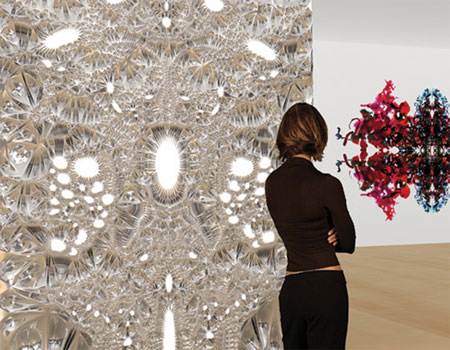
Ruy Klein / David Ruy and Karel Klein, Klex 2008
|
|||
|
||||
|
||||
|
Matters of Sensation Curated by Georgina Huljich and Marcelo Spina September 25 - November 22, 2008 Opening Reception: Wednesday, September 24, 6-10 pm in conjunction with Soho Night Exhibiting Architects: davidclovers with C.E.B. Reas, Emergent, Gage/Clemenceau Architects, Gnuform, Hirsuta, H�weler+Yoon Architecture, IwamotoScott Architecture, mod, MOS, murmur, Ruy Klein, Sotamaa, SU11, Xefirotarch Panel Discussion: Monday, September, 22 6:30 pm at Columbia University with Sylvia Lavin, Director of Critical Studies and MA/PhD Programs in Architecture at UCLA Marcelo Spina, Faculty and Applied Studies Coordinator, SCI-Arc, Co-Principal Patterns Benjamin Weil, Artists Space Peter Zellner, Faculty, SCI-Arc, Principal ZellnerPlus Moderated by Paola Antonelli, Senior Curator, Architecture and Design, MoMA Organized in collaboration with: Graduate School of Architecture, Planning and Preservation, Columbia University at Wood Auditorium, Avery Hall 1172 Amsterdam Avenue www.columbia.edu/about_columbia/map/avery.html Matters of Sensation is a group exhibition of projects by fourteen architecture studios in the United States, all from a new generation of practitioners. Whereas architects� use of computers first affected shape and structure, the participants in this exhibition address the way materials are not just about construction choices but also a means of creating diverse sensations in a space, focusing on the effects produced by the materials� textures and surfaces. Through playful manipulation of such elements, beauty, ornament, and pattern have thus found their way back into contemporary design. The best of these explorations avoid a neo-utilitarian tone in favor of aesthetic and psychological investigations. They are voluptuous productions that aspire to elicit a heightened awareness of our material environment. Such efforts became supercharged by the introduction of modeling software into academic studios in the early 1990s, followed soon after by rendering and animation software and then by digital fabrication. In the jump from a digital or virtual architecture to new modes of architectural fabrication usually described as research-oriented, productions must now be evaluated according to their success at evoking in the viewer material sensations and corporeal effects. Unaligned in their interests and bored by old debates, the group of young architects featured in Matters of Sensation produce work that attempts to answer no questions, solve no problems, and broach no oppositions. It is, rather, about a fascination with architectural forms that induce sensation�about fantasy, intimacy, and sci-fi, and, above all, about experiencing pleasure. |
||||
re-title.com
International contemporary art
SIGN UP FOR NEWSLETTERS

 SIGN UP for ARTIST MEMBERSHIP
SIGN UP for GALLERY MEMBERSHIP
SIGN UP for ARTIST MEMBERSHIP
SIGN UP for GALLERY MEMBERSHIP
Click on the map to search the directory