
|
Tarek Zaki Page 1 | Biography |
||||
Monument X, 2007.
|
||||
|
'Monument X' deals with the monument as a symbol, an iconic emblem of political and historical information. A monument is usually a statue or building that commemorates heroes and important events and turning points in our lives. We gradually forget about those heroes and events, but in spite of this, the monuments remain as a symbolic status and physical presence.‘Monument X’* is dismantled pieces. Sections of columns, plinths, arches and sculpted body parts made of plaster and cement are deliberately cut and grouped. It is not clear if the monument is being restored or deconstructed. How the whole monument should look like or what it represents stays ambiguous. Some parts are missing and it is left to the viewers’ imagination to complete the whole picture. |
||||
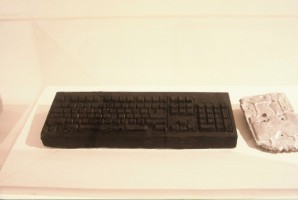
Time Machine: remembering tomorrow, 2004
In 'Time Machine: remembering tomorrow', the artist has created a museum environment for his handmade archaeological artifacts by placing them in conventional vitrines and imitating traditional museum lighting. Perhaps the term “multiple realities” best describes the endless array of possibilities this exhibition suggests to the viewer. A prime example of this would be the three “time zones” scenario. Time Zone 1 is a space in which the viewer perceives the exhibition in the present tense and reads the artifacts as authentic contemporary art objects. Meanwhile, in Time Zone 2 the viewer perceives him/herself in the present while viewing archaeological artifacts of the future—a prophecy of sorts as scientific discoveries of today will one day be the archaeological discoveries of tomorrow. In this time zone, the artifacts exist as found objects or ready-mades. They are perhaps futuristic, socio-cultural and anthropological comments on our current state of affairs. Finally, a reverse of the latter time zone would lead to Time Zone 3, in which the viewer imagines him/herself in the future examining the romanticized remnants of our contemporary times. Embracing Time zone 3 could lead to a sense of remorse, and perhaps even a slight catharsis. Whether one chooses to accept the “time zone” scenario or not, what is evident in the exhibition is that it represents a “Déjà vu” view on modern times. |
accept the “time zone” scenario or not, what is evident in the exhibition is that it represents a “Déjà vu” view on modern times. If the viewer is able to relate to the notion of the above-mentioned “time zone” scenario, then the very basis human evolution is both certified and dismissed within each and every vitrine.
BCADY2K, Cement and paint. Art Omi, NY. 2006 |
|||
|
||||
International contemporary art


SIGN UP FOR NEWSLETTERS
 SERVICE OVERVIEW
SIGN UP for ARTIST MEMBERSHIP
SIGN UP for GALLERY MEMBERSHIP
NEWSLETTERS & ANNOUNCEMENTS
NEWSLETTER SCHEDULE
ARTIST OPPORTUNITIES
POST ARTIST OPPORTUNITY
SERVICE OVERVIEW
SIGN UP for ARTIST MEMBERSHIP
SIGN UP for GALLERY MEMBERSHIP
NEWSLETTERS & ANNOUNCEMENTS
NEWSLETTER SCHEDULE
ARTIST OPPORTUNITIES
POST ARTIST OPPORTUNITY
Click on the map to search the directory