|
Sally Underwood Page 1 |
||||||||
|
||||||||
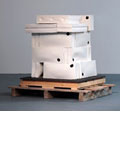
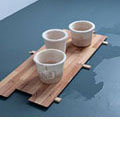
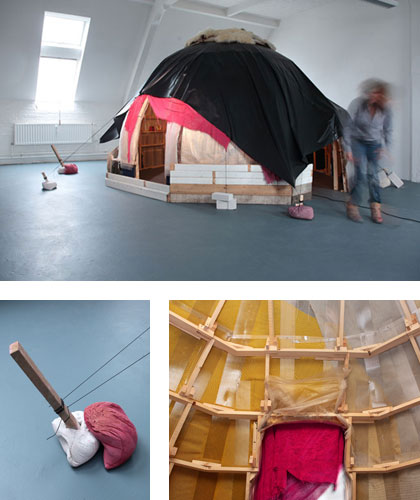
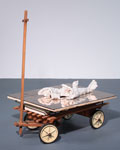
I Like Berlin and Berlin Likes Me (2011)
|
[...] free of a defined party political agenda, my position can remain ambiguous and abstract. My instinctive sympathy is towards leftist thinking and support for the underdog, the victim of the active power structures. But do I also derive some perverse pleasure from lowness and humiliation I subject my objects to? Is the work made in developing countries genuinely sympathetic or does it simply illustrate the fact that I am able to make these trips but reciprocation is unlikely?
Successful repression is impossible to imagine without the human capacity for humiliation. Humiliation is the consequence of an extreme form of exposure, when one is undressed to beneath one�s skin, when all sense of self that is achieved through external sources is gone. So it occupies two positions in the artist�s mind: a source of terror and the ultimate goal. The need to achieve this degree of exposure, and the requirement to operate in the public realm, means that the risk of humiliation is unavoidable. As Hannah Arendt proposes, only small acts can be achieved in private, but she also prescribes that for a work to achieve greatness, this effort to convey meaning must be hidden (as acts of exposure of course do not necessarily translate into great works�). For work to be truly political in the widest sense, it is necessary to be generous with one�s vulnerability, to take full responsibility for what is produced and to allow it to enter the public realm and risk one�s coherent sense of self." |
|||||||
|
||||||||
|
||||||||
re-title.com
International contemporary art
SIGN UP FOR NEWSLETTERS

 SIGN UP for ARTIST MEMBERSHIP
SIGN UP for GALLERY MEMBERSHIP
SIGN UP for ARTIST MEMBERSHIP
SIGN UP for GALLERY MEMBERSHIP
Click on the map to search the directory