|
Lis Fields Page 1 |
|||||||||
|
|||||||||
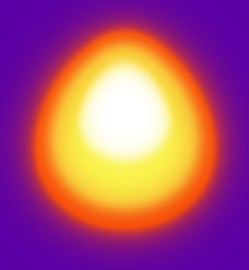
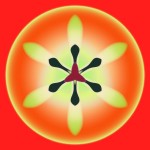
orange tulip, digital print, 2002
|
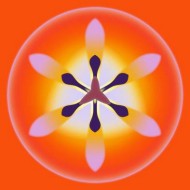
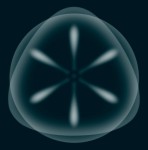
The 'Poppy' series and the 'Tulip' series each exist as paintings and as digital prints. The source of each series is a macro photograph of the centre of a flower. The photograph reveals the geometric structure of the flower�s centre. The geometric structure, extracted and abstracted from the flower, is drawn on a computer. These drawings are developed into a series of small digital prints (30cm x 30cm). Finally, the image is projected onto canvas and used as a template for a larger painting (121cm x 121cm). There is a chronology to this sequence of representations. At each stage the relationship between the image and what it was originally a picture of, becomes more mediated. Each painting is a picture of a digital image, which is a picture of a photograph, which is a picture of a flower. The paintings contain this complex history of their making.
|
|
|||||||
|
Finally, the image is projected onto canvas and used as a template for a larger painting (121cm x 121cm). There is a chronology to this sequence of representations. At each stage the relationship between the image and what it was originally a picture of, becomes more mediated. Each painting is a picture of a digital image, which is a picture of a photograph, which is a picture of a flower. The paintings contain this complex history of their making.There is a tension between the different forms of representation of photography, digital image making and painting. The paintings appear to be mechanically made but are in fact hand-painted with a brush. The digital prints have the vivacity of paint and the smooth surface of photographs. The surface of each medium has different properties but in these works the differences are minimalized, so that it is not immediately clear either what it is one is looking at or how it was made.
|
|||||||||
|
Although these geometric shapes are pictures of flower heads, linked through a series of representations, the optical effects created by the careful interplay of colour, tone and shape, make the form hover between figuration and abstraction.
|
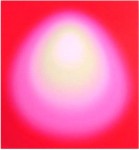
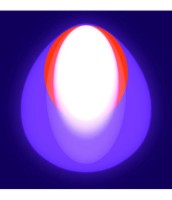
small violet elipse, digital print, 2003
|
Tulips are beautiful, kitsch and a symbol of national and economic identity: an emblem of nature as well as of horticultural expertise and political power.But there is more to these pictures. The unsettling optical effects and unnatural colours flood the image with other cultural associations, such as the contrivances of science fiction and computer-generated scientific illustration. The strange geometric forms seem other-worldly: an alien form that emits, reflects and absorbs strange light in a strange way.
|
|||||||
|
|||||||||
re-title.com
International contemporary art
SIGN UP FOR NEWSLETTERS

 SIGN UP for ARTIST MEMBERSHIP
SIGN UP for GALLERY MEMBERSHIP
SIGN UP for ARTIST MEMBERSHIP
SIGN UP for GALLERY MEMBERSHIP
Click on the map to search the directory