|
PETER ALLEN HOFFMANN Page 1 | 2 | Biography |
||||
|
||||
|
In the current climate of bad= good, ugly= better and grotesque= best, Peter Hoffmann's work is somewhat of an anomaly,and frankly, astonishing. He is a painter�s painter in the truest sense of the word - the work is about paint, canvas, landscape, tradition and beauty, and above all the richness of the artist's and viewer�s inner life, brought to light. In his oversize, epic landscape paintings, Hoffmann treads new footing in very old terrain; areas previously navigated by Courbet, Redon, and the American and French luminaries, and more recently by our own Hartley, Burchfield, Avery, and Dove. |
||||
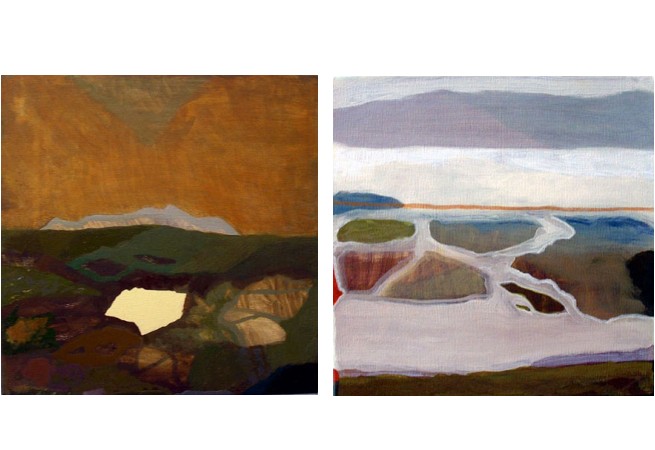
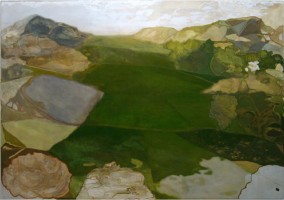
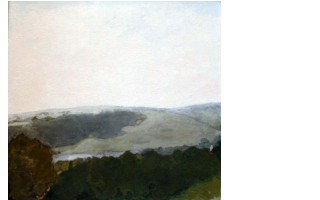
PETER ALLEN HOFFMANN New Landscapes Freight & Volume, New York May 13 � June 10, 2006 Images from top (L-R) Peter Allen Hoffmann, Out, 2006, oil on canvas, 24 x 24" Peter Allen Hoffmann, Passed, 2006, oil on canvas, 12 x 12" Peter Allen Hoffmann, Marked, 2005, oil on canvas, 84 x 120" Peter Allen Hoffmann, Jena, 2006, oil on canvas, 15 x 15" |
Hoffmann's work celebrates the supernatural; glazed layers of distance and foreground are blurred and redefined by a visionary's naked quest for the truth. Hoffmann unabashedly painted many of these bucolic scenes from a hyper-urban studio at Hunter College in Hell�s Kitchen, where he has recently concluded the graduate program. He is a native Pennsylvanian, which in part might explain the sun-bleached, rural palette and luminous wide-open spaces; but that isn't enough to explain his approach. Hoffmann's choice of landscape as subject is actually quite radical; non-trendy; fraught with levels of projection and meaning, ghosts and epiphanies take root in undulating, sensuous horizons, ridges, lakes, hills and valleys. A lot takes place in these seemingly benign pastorals; which in fact are more political than self-proclaimed
political work. Given the current administration's callous treatment of environmental issues small and large, Hoffmann's scenes conjure up a fragile yet potent metaphor of loss, fleeting utopia and dystopia. The canvases are parables for our time, in which global warming will forever change our perception of the natural world, in which Katrina-like disaster alters our version of natural harmony forever.
|
|||
|
||||
re-title.com
International contemporary art
SIGN UP FOR NEWSLETTERS

 SIGN UP for ARTIST MEMBERSHIP
SIGN UP for GALLERY MEMBERSHIP
SIGN UP for ARTIST MEMBERSHIP
SIGN UP for GALLERY MEMBERSHIP
Click on the map to search the directory