|
Mckendree Key Page 1 |
|||||||||
|
|||||||||
|
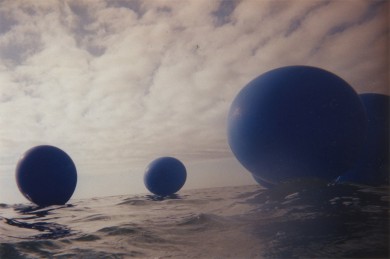
understands the piece to be. The viewer might get something completely different out of what they see. In some of my pieces, the viewer is invited to become a participant. In many of these altered landscapes, I invite people to swim or crawl through the work. This adds a whole new element to the piece: the physical experience. In some ways, this physical experience is more real than a photograph of a piece,
|
|
|||||||
|
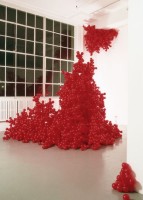
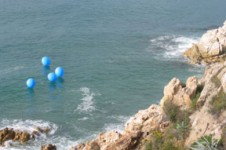
or maybe even looking at the piece from the shore. Once people have physically entered the place, they are bonded by the feeling that they all are sharing a similar physical experience. Their personal differences are set aside. Everyone has a body; therefore everyone can experience a physical sensation and the relationship between their body and the surrounding environment.In much of my work, nature is a force to be reckoned with. Above all, you learn the power of water, the power of air. The intensity of our natural environment. This work is not a way of competing with nature, or a way of beautifying it. It is a dialogue with a place, just a brief conversation with a landscape. None of the pieces last for very long. Plastic is a material that is considered very artificial and does not degrade easily. Yet there is no way for these structures or landscapes to endure. Water or air in their many states will eventually break them down. In Terrace, people walked into a gallery off a busy Barcelona street, and after walking up 2 flights of stairs, found themselves in an outdoor space filled with balls up to their thighs. They were invited to enter the space. I hope this made people think about their urban environment and about hidden spaces; the unexpected.
|
|||||||||
|
On the Terrace, the balls acted similarly to water, or to snow. They formed drifts, they were manipulated by the wind. People thought about some kind of artificial nature, or natural artificiality. They thought about where they were in an urban landscape. I hope people will pause to consider the landscapes in which they live, their natural environment, especially if they are urban dwellers. For example,
|
|
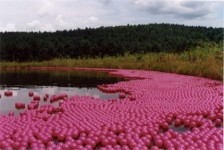
Hallettt�s Cove might remind people that they are living on or near an island, where water surrounds us. This cove was here long ago, way before William Hallett purchased the land from Native Americans in 1652. They might think about rivers, and where this river comes from. Where does it go? Would these structures float away, and if so, where would they end up? Maybe they will be reminded that all parts of the world are connected by water. I hope people will realize the power of nature, but also realize the power of humans and what we are able to create.
|
|||||||
|
|||||||||
re-title.com
International contemporary art
SIGN UP FOR NEWSLETTERS

 SIGN UP for ARTIST MEMBERSHIP
SIGN UP for GALLERY MEMBERSHIP
SIGN UP for ARTIST MEMBERSHIP
SIGN UP for GALLERY MEMBERSHIP
Click on the map to search the directory