|
Linda Cummings Page 1 |
|||||||||
|
|||||||||
|
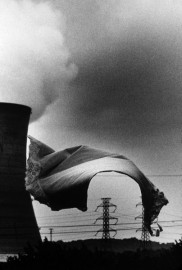
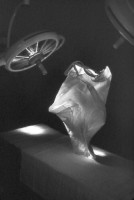
Formerly my photographs depicted an empty slip as a body hovering and floating through public and institutional spaces. In this new work, I am photographing while traveling inside mechanical bodies designed to carry other bodies through space and time. The slip as an object has mutated into slipping as an experience. It is my aim to incorporate the act of slipping into the viewing experience and into the
|
|
|||||||
|
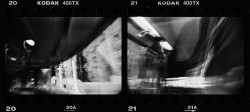
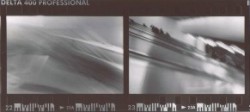
process of making the picture. Flight, movement, equilibrium, and the operations of perception are my subject. - Individual 24 frame sequences of images reveal various hypnotic passages in which dreaming, free association, and unexpected access or restrictions orchestrate the experience of being a passenger. Each unique strip of 35mm black and white negative film represents a particular experience photographed within a 24 minute interval while my body was being transported through space and time. My frame of reference is the vast interconnecting system of transportation in New York City. I wish to call to mind the fluidity of time (i.e., the duration of 24 frames per second in the vernacular of the cinema and the 24 hours in a day). Taken together, the 24 unedited frames constitute a kind of train of thought or thread of perception; an event in which subliminal impressions mix with recognizable forms in lyrical ways. - I wanted to shoot from the hip, so to speak, preferring to perceive and to experience my passage from eyes located all over my body. Juxtaposition, condensation, repetition, fragmentation, and the use of the frame provide visual structure for this work. Previously juxtaposition occurred in my photographs primarily as a spatial event in the landscape.
|
|||||||||
|
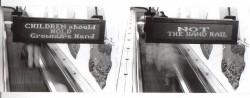
In this new work, juxtaposition operates primarily as a temporal event between the frames. This work also slips between two representational systems - words and images. �Reading Between the Lines� points to a travelogue of on-going fragments: ideas, impressions, memories, and literature that drifted through my mind as a passenger.
|
|
In much the same way that a fragment of a dream can condense its meaning or stand in for the whole of a dream, any two frames can be printed together to suggest the essence of the total experience. By displaying some pieces around corners (i.e., �East River Crossing�), the viewer must either move her/his body to view the entire piece or rely upon a persistence of vision, that encourages memory and imagination, to fill in the gaps between what is seen and unseen.
|
|||||||
|
|||||||||
re-title.com
International contemporary art
SIGN UP FOR NEWSLETTERS

 SIGN UP for ARTIST MEMBERSHIP
SIGN UP for GALLERY MEMBERSHIP
SIGN UP for ARTIST MEMBERSHIP
SIGN UP for GALLERY MEMBERSHIP
Click on the map to search the directory