
|
Antony Crossfield Page 1 | 2 | 3 |
||||
|
||||
|
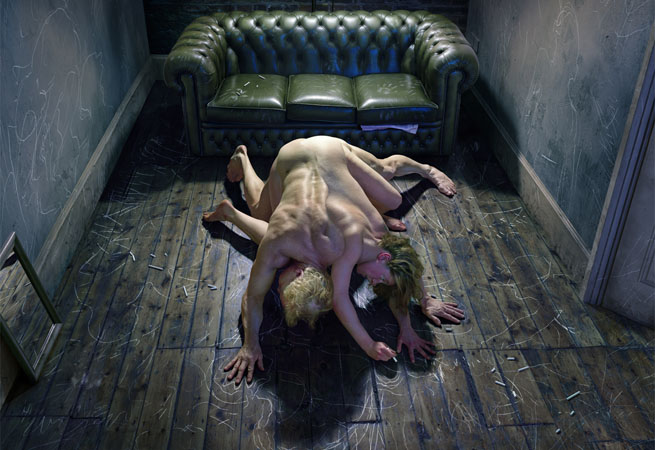
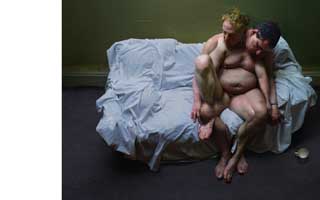
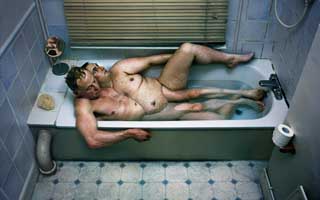
Through my art I seek to question and undermine traditional conceptions of corporeality whilst exploring the relationship between the body and identity. Western thought has traditionally viewed the human subject in a dualist way, as consisting of two separate entities- mind and body. Epitomised by Descartes, this view insists that to be a self is above all to be distinguished from the other, to be ordered and discrete, a self secure within the well-defined boundaries of the body, capable of existing independently of the body rather than actually being the body. Through my photography I seek to challenge these conceptions of the self and the body. I am trying to present vision of the subject as fundamentally embodied whilst raising questions as to the closure and integrity of the self. |
||||
|
Through my photography I seek to challenge these conceptions of the self and the body. I am trying to present vision of the subject as fundamentally embodied whilst raising questions as to the closure and integrity of the self. I wish to present the body not as a protective envelope that defines and unifies our limits, but as an organ of physical and psychical interchange between bodies- a kind of inter-subjectivity that produces identity. In my work the body is presented as unstable, ambiguous, fluid, and constantly in flux. I am hoping to highlight how our experience of the body is always already mediated by our continual interactions with other human and non-human bodies. To draw attention to the invisible forces of culture and psychology that shape and reshape the body.
The naked male figure figures prominently in many of my photographs. This has been for many reasons. The history of the nude in western art has been predominantly focused on the female nude. Contemporary lens based media is obsessed with the female figure. I am interested to expose and explore the blind spot of the naked male figure in photography. Simply put, focusing on men is a strategy to challenge the tradition of the objectification of women. Moreover, I am trying to work against a stereotypical discourse of masculinity.
|
|||
|
||||
International contemporary art
SIGN UP FOR NEWSLETTERS
 SERVICE OVERVIEW
SIGN UP for ARTIST MEMBERSHIP
SIGN UP for GALLERY MEMBERSHIP
NEWSLETTERS & ANNOUNCEMENTS
NEWSLETTER SCHEDULE
ARTIST OPPORTUNITIES
POST ARTIST OPPORTUNITY
SERVICE OVERVIEW
SIGN UP for ARTIST MEMBERSHIP
SIGN UP for GALLERY MEMBERSHIP
NEWSLETTERS & ANNOUNCEMENTS
NEWSLETTER SCHEDULE
ARTIST OPPORTUNITIES
POST ARTIST OPPORTUNITY
Click on the map to search the directory