
|
Dylan Shipton Page 1 |
||||
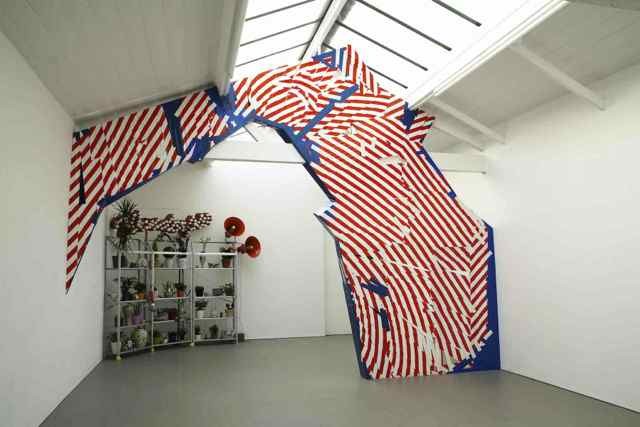
The A-Frame
|
||||
|
Part of an on going series of site specific paintings built from hazard tape stretched over a timber framework shown at Cell Project Space London 2008 |
||||
Onwards and Upwards
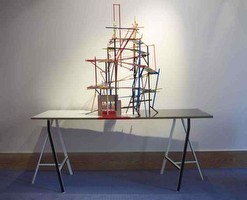
My Homage to Tatlin |
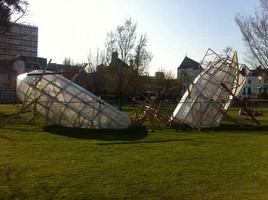
A collaboration between artist Dylan Shipton & Ben Fitton This structure takes the form of a stricken airship, whose central section has collapsed and disintegrated, bringing the vessel to the ground. The nose and tail sections remain more-or-less intact, pointing awkwardly askew, but the central section which still (but barely) joins them, is little more than a tangled mess.
Monument to the Excluded Middle |
|||
|
||||
International contemporary art
SIGN UP FOR NEWSLETTERS
 SERVICE OVERVIEW
SIGN UP for ARTIST MEMBERSHIP
SIGN UP for GALLERY MEMBERSHIP
NEWSLETTERS & ANNOUNCEMENTS
NEWSLETTER SCHEDULE
ARTIST OPPORTUNITIES
POST ARTIST OPPORTUNITY
SERVICE OVERVIEW
SIGN UP for ARTIST MEMBERSHIP
SIGN UP for GALLERY MEMBERSHIP
NEWSLETTERS & ANNOUNCEMENTS
NEWSLETTER SCHEDULE
ARTIST OPPORTUNITIES
POST ARTIST OPPORTUNITY
Click on the map to search the directory